No Item
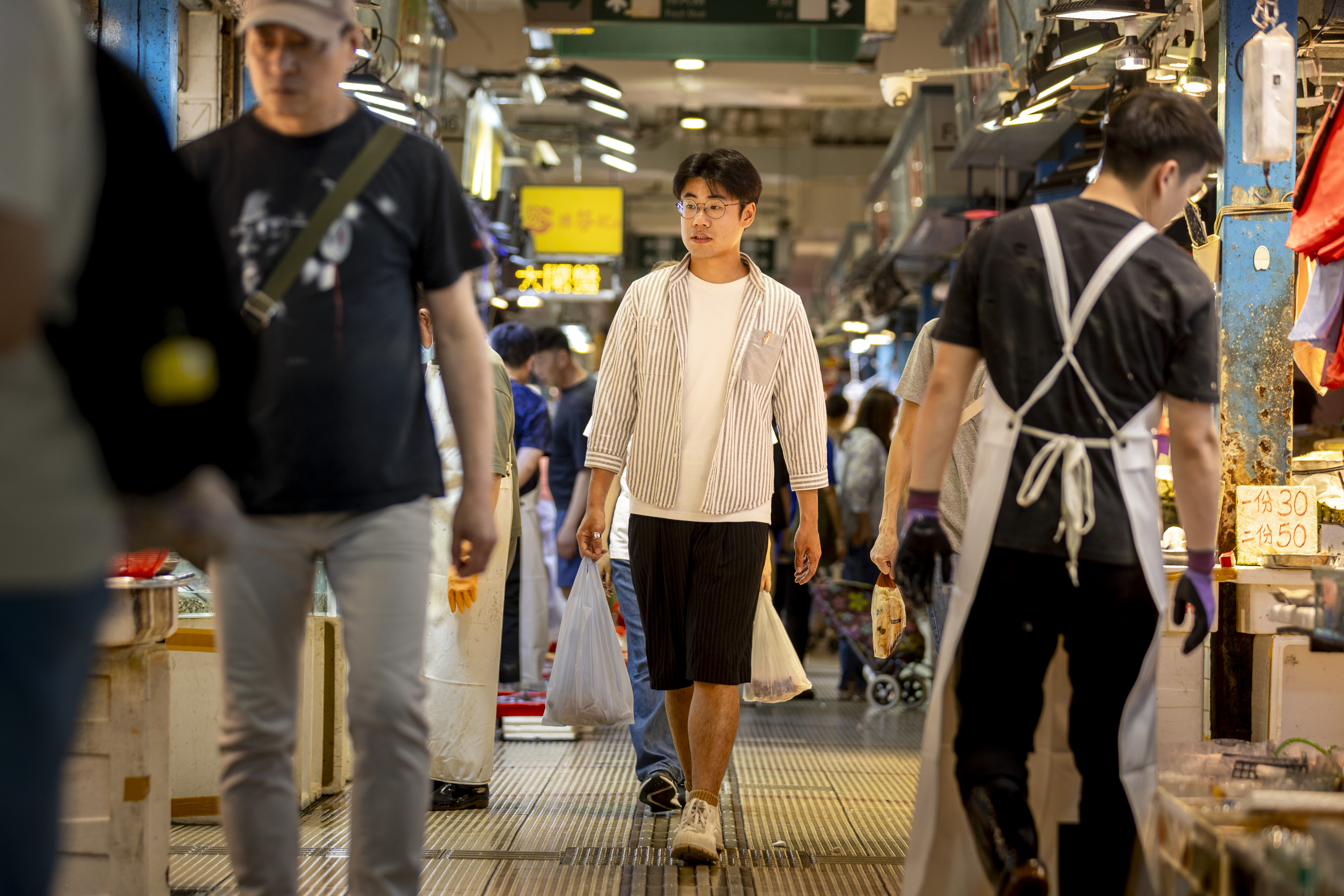
Interview: Leanne Wong|Photography: Tse Pak-chai | Translation: Harmony Yuen
Date of Interview: 27 December 2025
About Keith Lai Nok-wai
- Keith has been interested in fish since he was in kindergarten, curious about their classification, rearing, aquaculture, cultural history, cuisine and drawings.
- In 2019, Keith studied aquaculture at the National Taiwan Ocean University. He pursued another master’s degree in fish taxonomy in 2023, after which he returned to Hong Kong and worked on marine education.
- In July 2023, Keith published the book Hong Kong Market Sea Fish.
About Hong Kong Market Sea Fish
- The book consists of nine chapters in total. Chapters 1 to 6 and Chapter 8 focus on the anatomy of fish, how fish are measured, the ecology of fish, their breeding habits, classification and what to look out for when you purchase them.
- Chapter 7 is a collection of over 300 species of marine fish available in Hong Kong, paired with over 600 colourful photographs showcasing the form of each species.
- The book provides information on each species’ origin, regional distribution, reproductive season, price range, as well as how it is normally sold, how common the species is and how it is best served as a cuisine. Additionally, the book looks at each species from diverse angles: as food, as a member of the fishing industry, as a part of aquaculture and as a part of culture, allowing readers to gain an in-depth understanding of fish and other marine animals.
- The final chapter turns to marine conservation and fish rearing, inviting the reader to think about what a sustainable fishing industry looks like.
- Before the book comes to a close, there are two indexes outlining common names for fish in Hong Kong and their names in Chinese for reference.
About Keith’s Workshop for Let Us Go!
- Theme | Basic Knowledge and Documentation of Marine Fish
- Date | 26 October 2025
- Event | Keith introduced fish to participants in the Ap Lei Chau Market, explaining the everyday operation of the wholesale fish market, the dawn market and the wet market itself. In the second half of the workshop, he spoke of his book, as well as Hong Kong’s unique fish consumption culture and the environmental issues related to the fishing industry.
- Relationship with Satoyama and Satoumi in Hong Kong | For someone who lives in the city but is keen on living a satoumi life, a walk round the fish stalls might be the simplest method. Marine education is all about gaining knowledge, proximity, and passion for fish rather than simply fulfilling our appetite. It encourages us to ask where fish come from, how they are reared, their culture, as well as what eating certain fish can mean for our health and for ecology. From there, we learn to treat marine life with care and respect.
Interview
1. Why do you like fish so much?
For as long as I can remember, I have simply liked fish since I was small. I’m naturally attracted to them. My most vivid memory from childhood was of a tank of ‘marble fish,’ more commonly known as sailfin molly, that my parents brought home from Goldfish Street. They are named this way in Chinese as their plump bodies resemble marbles. That also makes it impossible to tell when one of them is pregnant. One morning, when I was still in kindergarten, I woke up and found several newborn babies in the tank among the water weeds. It was almost magical to witness birth taking place right in front of my eyes. From that point onwards, I immersed myself deeply in the world of fish, and I’ve stayed in it ever since.
Later, as I got to encounter more students, I came to understand that passion isn’t something you can simply have just because you want it. Looking back on these years, I increasingly feel that this passion was a blessing—the fact that I encountered something intriguing at such a young age. For this, I’m forever grateful.
2. As a child, how did you fulfil your curiosity about the sea? Where did you usually get to encounter fish?
When I was small, there were no STEM classes at school although they are more common nowadays. There was pitifully little knowledge about the sea in our textbooks as well. I remember coming across only one page in the general studies book on marine life, very simplistically written, something as basic as Nemo from Finding Nemo being a saltwater fish and goldfish being freshwater fish.
To satisfy my curiosity, I went treasure-hunting in the public library a lot. The leisure and entertainment section taught me a lot about fish rearing, and the natural sciences section was full of marine knowledge. I enjoyed my reading time a lot.
After I entered primary school, my family took me fishing and to the wet market. I still remember the first pufferfish I caught at Sai Wan Ho Ferry Pier and how excited I felt. My mother liked to offer me fun quizzes from time to time. After school, she’d ask me to open the fridge, look at the pieces of fish she’d bought and guess the species. I could usually work it out from the texture of the flesh, the colour and the size of the scales—which came as quite a surprise to her! As I entered the senior years of primary school, I even started a blog to file my own records of keeping fish, catching fish, and eating fish.
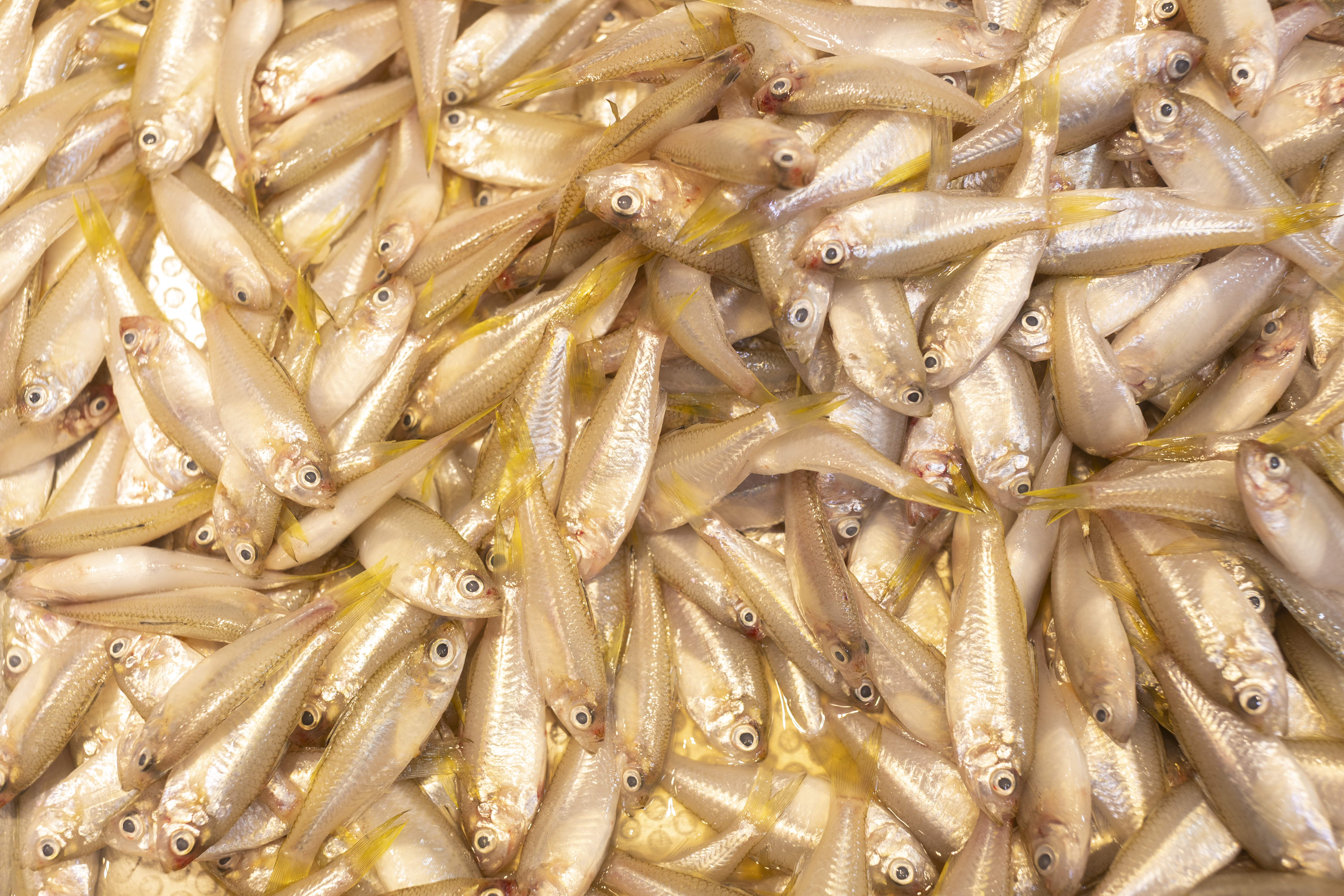
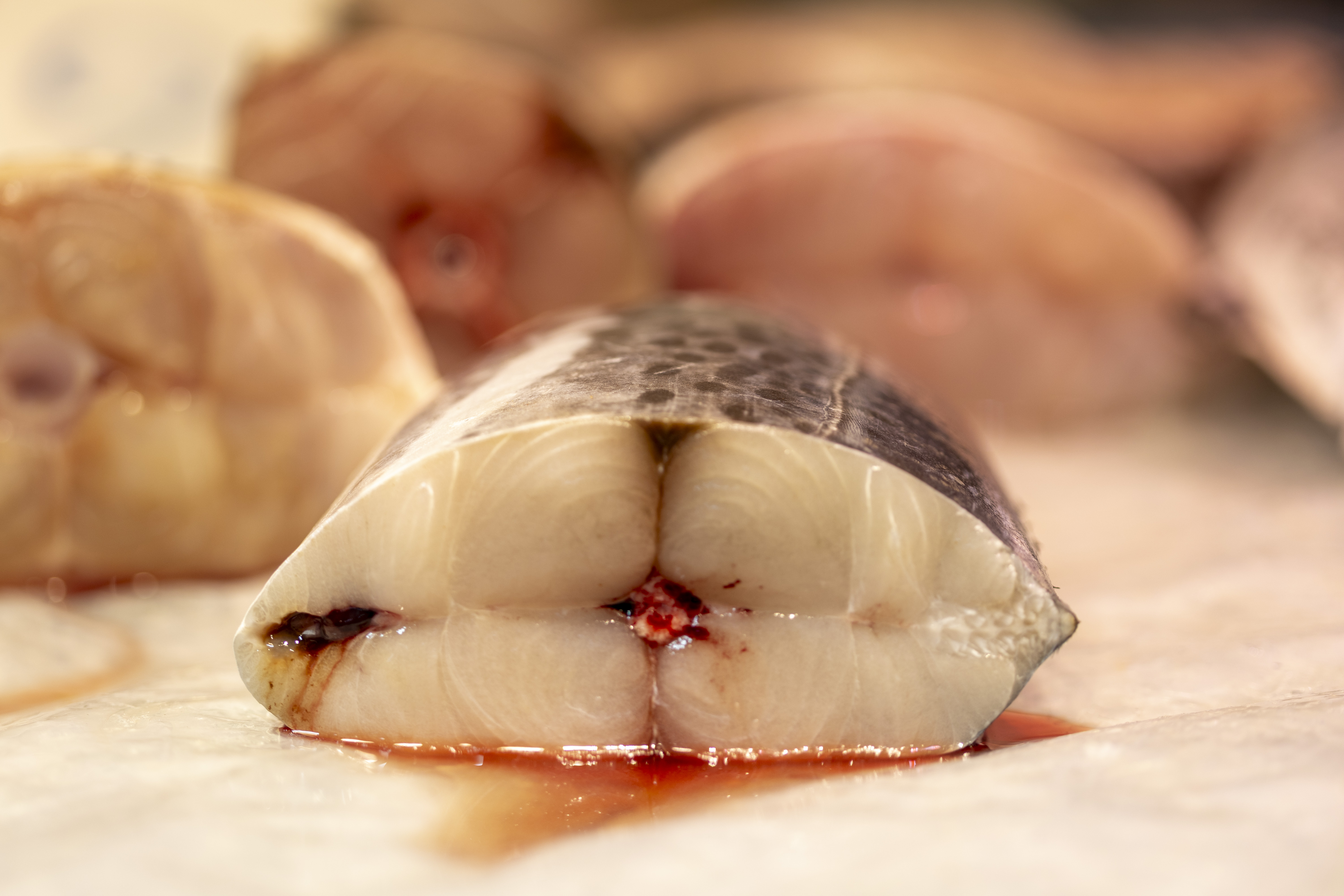
3. You’ve loved fish ever since you were a child, but you eat fish too. How do you make sense of that?
It sounds like a contradiction indeed. I remember a black ghost I kept in primary school that died because I hadn’t looked after it properly. I was so depressed I cried for days. That was probably the first time I had to face the weight of death. Growing up, I often shared secrets with the fish I kept. And yet it wasn’t until the senior years of primary school that I started to think consciously about eating fish. I moved from unconscious eating to mindful eating, and gradually came to teach myself more about the knowledge and culture of fish.
Rather than seeing all fish as friends and stopping others from eating them, I’d rather face the fact that somebody will eat fish anyway, regardless of whether I do so myself. That being said, I decided to take the knowledge of fish seriously, and use that as an entry point to infuse the stories, culture and values behind fish as a species into my teaching process. This approach made me feel more in touch with fish, and it allowed me to connect more deeply with others
4. What inspired you to write Hong Kong Market Sea Fish?
After I graduated from secondary school, I followed my heart and went for a degree in aquaculture in Taiwan, followed by another master’s in fish taxonomy. Apart from studying, I also contributed to a column for the CommonWealth Magazine, an economic and current affairs magazine based in Taiwan, where I accumulated experience in writing about fish. The column drew attention from a publisher, opening the first door for me.
At that time, they meant for my book to consist mostly of knowledge about fish, including content like an introduction to their immune and digestive systems. My gut feeling was that this theme would suit a university course more. I also felt that I wasn’t knowledgeable enough to take on this task. However, there was an alternative idea that I’d kept at the back of my head for a while. I then pitched it to the publisher, and they happily took on the project. This was how Hong Kong Market Sea Fish came to life.
Throughout my six years in Taiwan, I spent an extensive period conducting fieldwork in the Kanzaiding Fish Market located in Keelung City, known as the largest seafood market in northern Taiwan, contributing to the editorial process of a publication introducing fish culture and the Market itself. The book encompasses a range of themes, including history, culture, fish species, cuisine and fish trade. It is full of colourful illustrations, offering a complete guide for the reader. This experience made me feel that Hong Kong deserves a book about fish and the culinary culture that revolves around it, too. Since nobody had done it before, I wanted to give it a go, showcasing the variety of fish and their stories in Hong Kong.
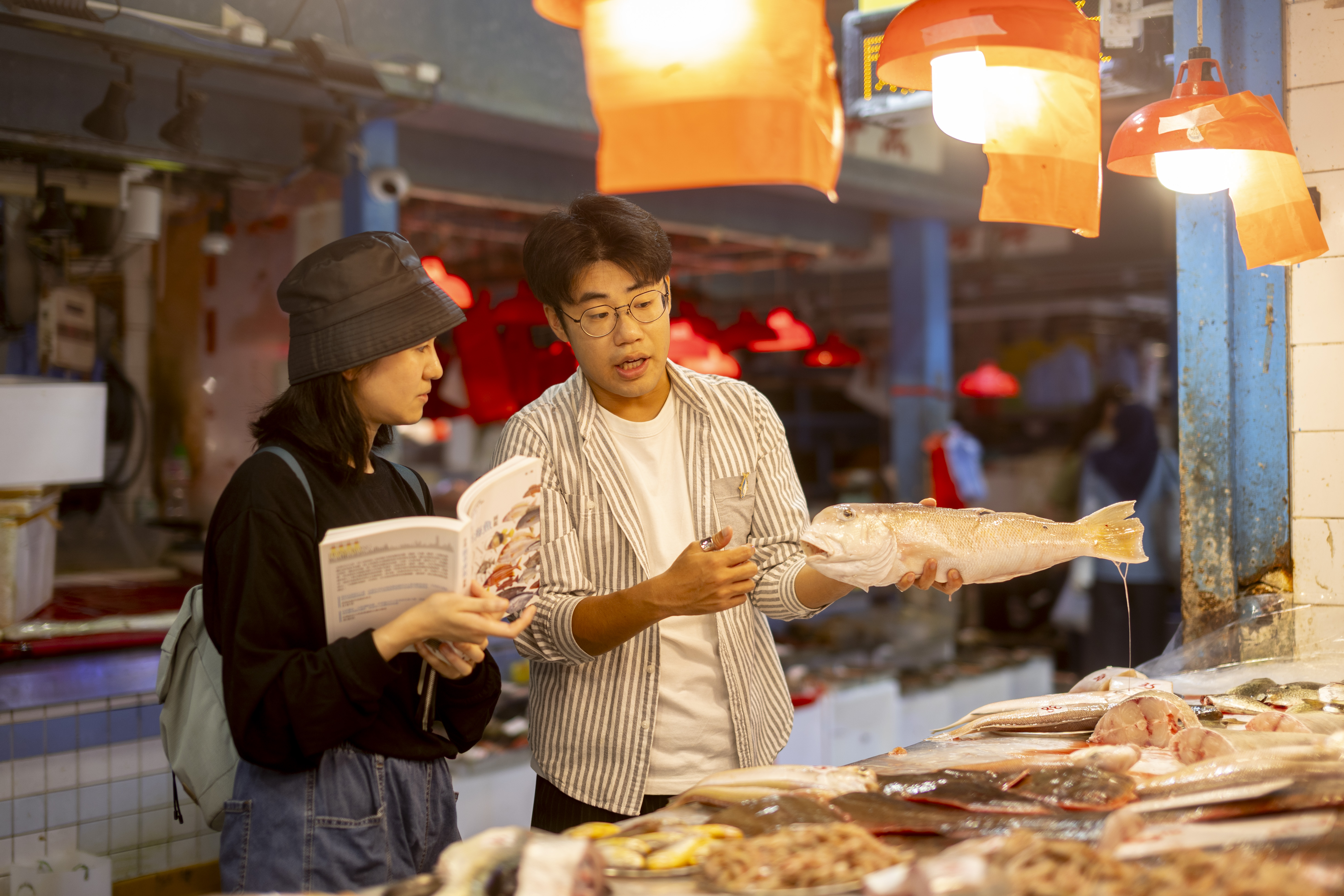
5. Are wet markets in Hong Kong a good place to learn about marine fish?
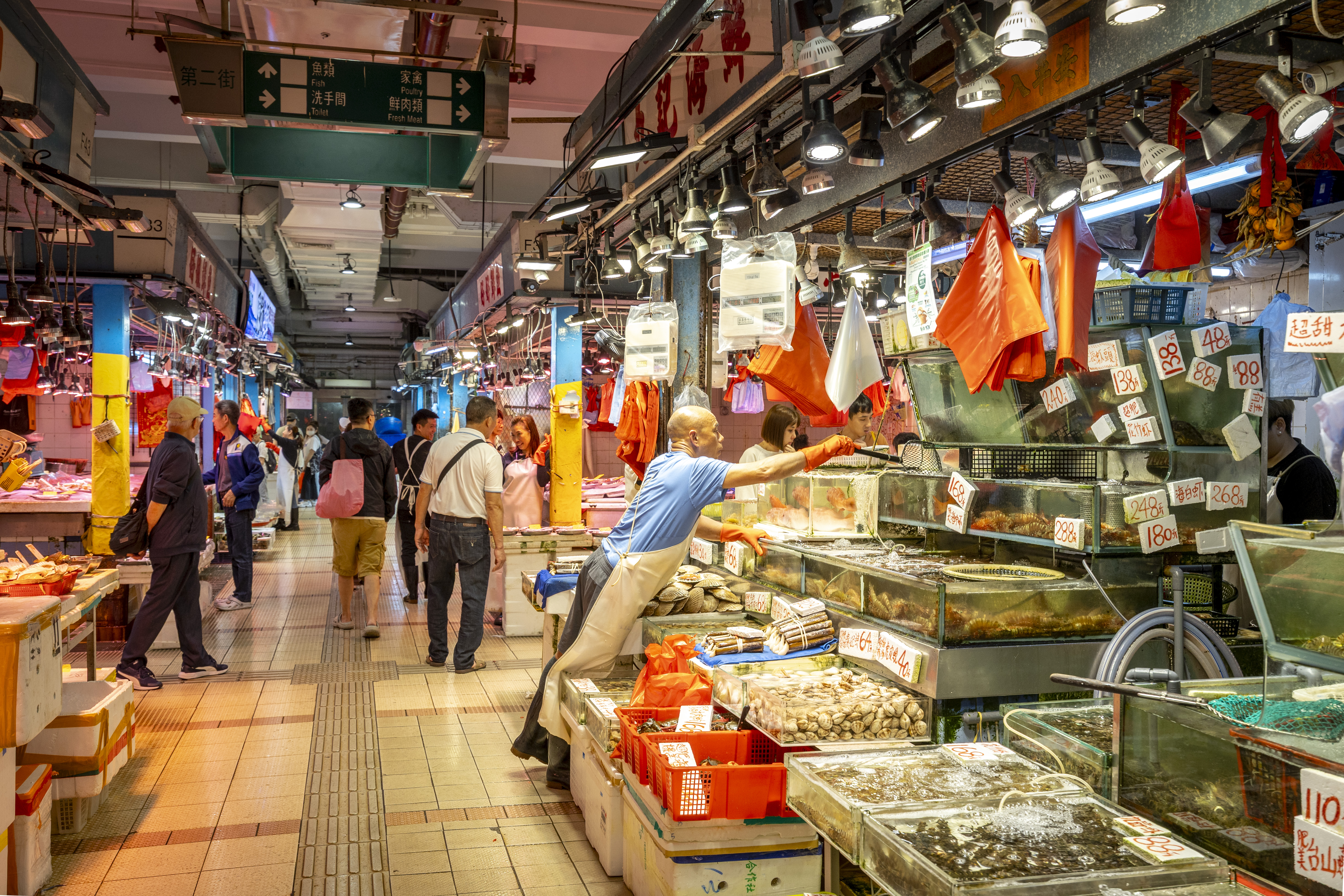
Wet markets are excellent spots for marine education. Comparatively speaking, wholesale markets are not particularly friendly to general visitors due to their mode of operation and opening hours. But wet markets are different, as we have up to 200 of them in Hong Kong, and you can always find a stall selling fish wherever you go. This high level of convenience makes it possible for anyone to encounter marine fish anytime. Personally, it was how I got to observe and learn about fish as a kid as well.
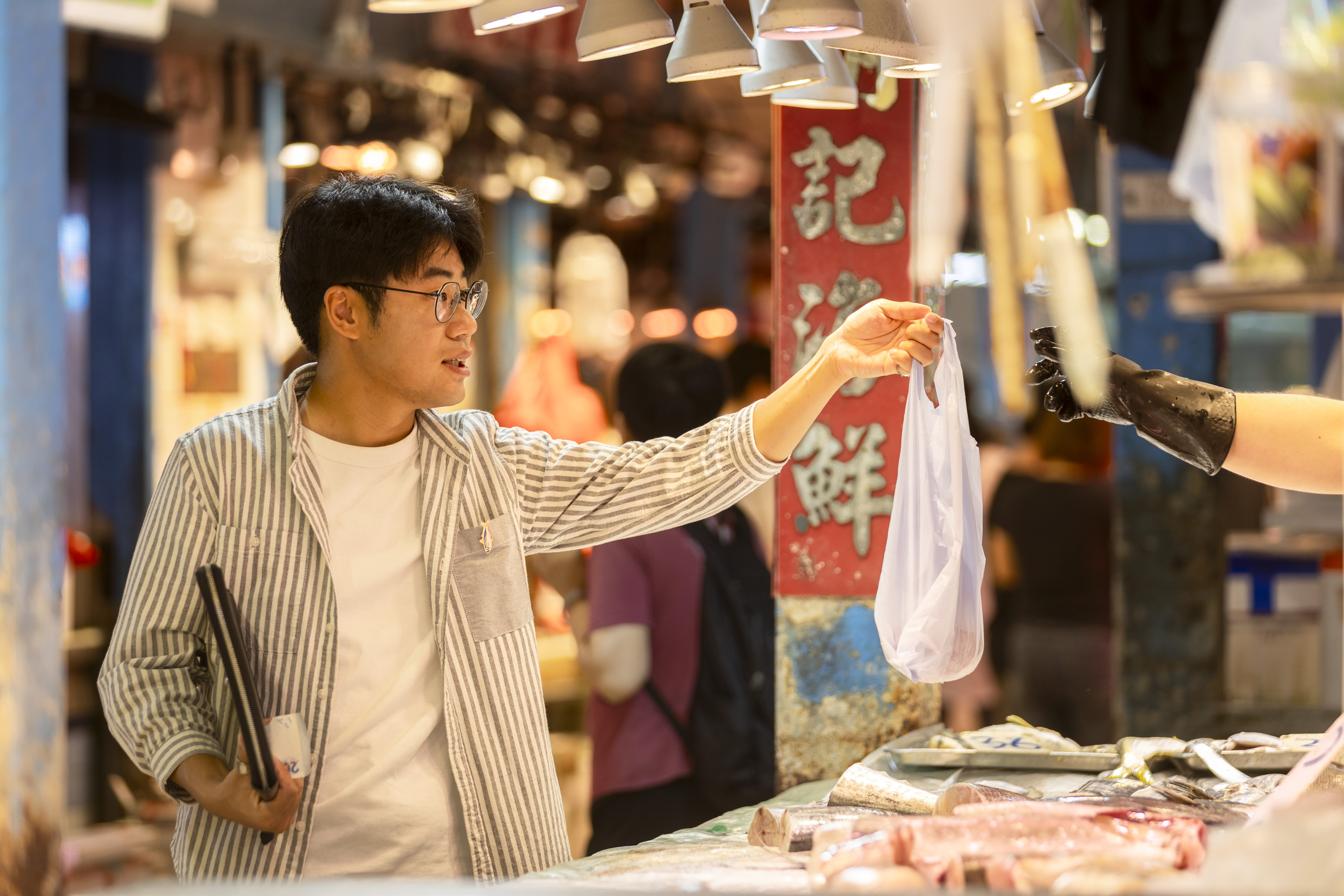
Spending extensive time in wet markets during childhood and in fish markets during university days, I’ve had countless conversations with seafood sellers. It was not completely smooth at first as I hadn’t learned the right manners and got brushed off sometimes. As time went by, they became willing to keep fish for me, offer me extra goods and become more open about their experience in the fishing industry. Trust and friendship can only be built over time. I like to joke about our relationship by alluding to a shared passion for everything fishy!
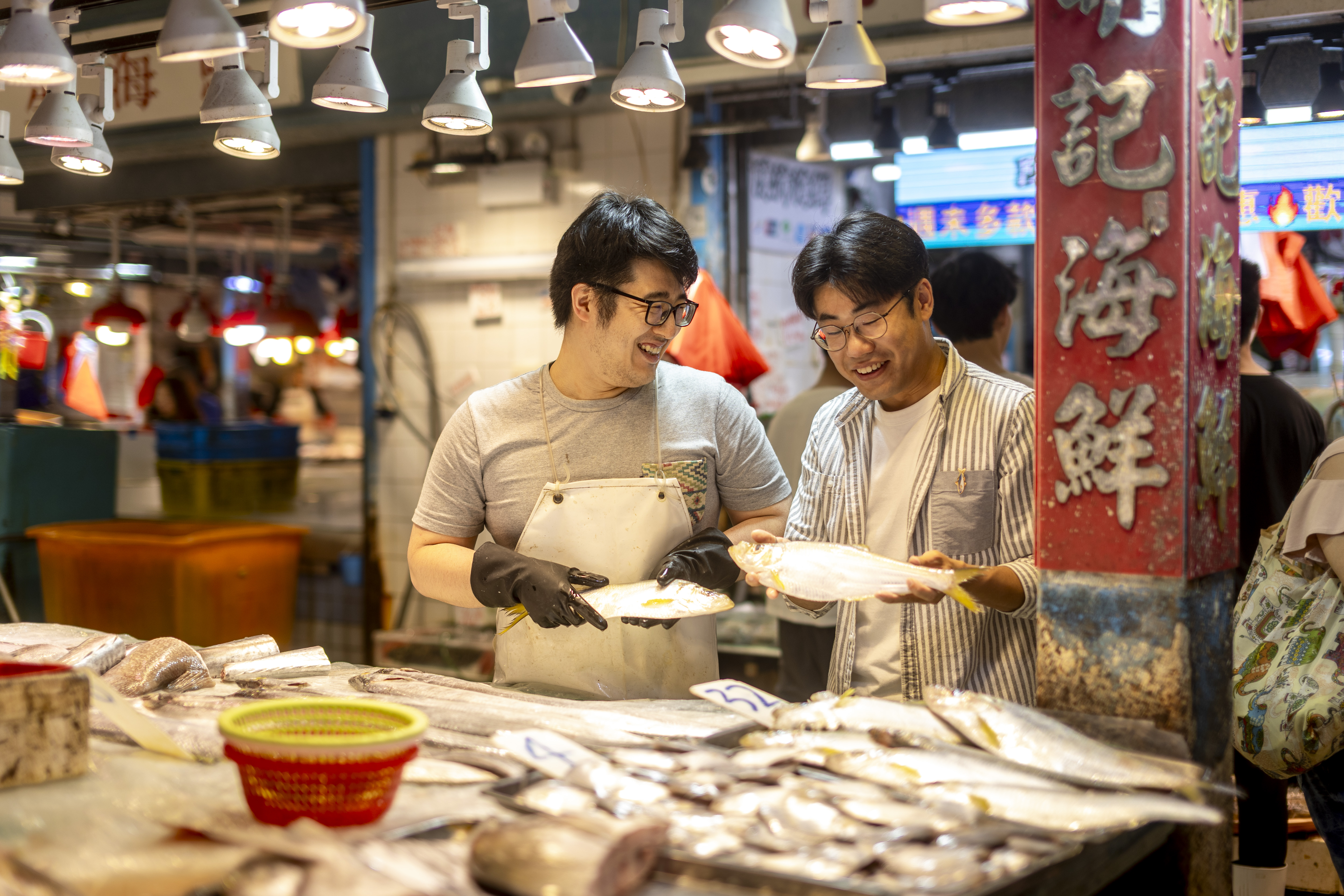
6. Which market would you say is the best starting point for someone interested in observing fish?
There is no standard answer to this as each market is unique in its own way. The Pei Ho Street Market is famous for its good bargains, while markets equipped with a Cooked Food Market allow restaurants to buy and cook fish after sourcing them from a stall nearby. This lets customers get a taste of fresh fish, which can be an advantage. If your wish is to encounter wild marine fish caught and sold on the same day, then you could consider markets near the sea, such as Sai Kung, Tai Po or Aberdeen. You’ll get to witness a more genuine side of the fishing industry there.
Apart from the features unique to each wet market, connection with the community is equally important. A lot of us are most familiar with the market in our own neighbourhood. The vendors, environment and ambience there create a foundation for further connection to flourish. Most people have no means of knowing where each fish comes from, or how and when they were caught. Whether or not you can access that information depends on mutual trust with the vendor.
Therefore, it doesn’t really matter which market you choose to go. It all depends on your goals and needs. Ask yourself: Do you wish to learn about the diversity of fish species? Are you curious about the daily operation of Hong Kong’s fishing industry? Are affordability and convenience a priority for you? As long as you are able to build trust with the vendors, and grasp every opportunity for observation, learning and conversation, any wet market will work perfectly well as your entry point to marine knowledge.
7. You made it clear that your book is not an academic publication, but one that seeks to document the stories and culture of fish in a manner more accessible to the general public. Can you say more about your position on the spectrum of science and culture?
For an academic book in the traditional sense, the text is filled with proper nouns explaining fish anatomy, such as the number and appearance of gill rakers, fin rays and lateral lines, or the phylogenetic relationships within species. For a general readership, this information is challenging and irrelevant. I aspire not to write a book that intimidates the reader, and I reckon that authors should write in a different voice depending on their target readership.
If I stand in front of a stall in the wet market and ask for a ‘Scoliodon laticaudus,’ who’s going to understand? In the wet markets of Hong Kong, they are simply known as the ‘spadenose sharks.’ For this same reason, the 300 types of marine fish included in Hong Kong Market Sea Fish are all labelled with their common names widely known in the context of Hong Kong in the title, followed by what they are called in Taiwan and the Chinese mainland. Finally, I include their scientific name and common name in English. I dedicate one to two pages to each fish to outline its characteristics from diverse perspectives—from ecology, fishkeeping culture, culinary instructions, market performance, to cultural differences between Hong Kong and Taiwan—all paired with my own photographs.
I chose to present fish in a multi-dimensional way so that readers can easily approach them as food at first, then move on to learn more about marine fish. With the fundamentals in mind, they can decide whether they want to know more about issues like marine preservation and food safety by extension. I think that a person’s knowledge about a fish can be judged by how much and how intensely they’re able to talk about it. Whatever I think can intrigue the readers and arouse their interest, I include in the book
8. What challenges have you faced, and what lessons have you learned during your writing process?
The process was challenging and full of hurdles. Rare species were expensive and hard to find. Sometimes fish sellers were so quick in action that they’d cut a fish open before I managed to snap a picture! Another problem that I hadn’t expected was the diverse range of common names in daily circulation. Taking the red bigeye as an example, some people think of it as synonymous with the golden threadfin bream, but it doesn’t make sense to me.
But if I were to pinpoint each species under the red bigeye and golden threadfin bream families and to figure out each of their names, I would never find the right answer. Similar to nicknames that human beings have, fish names vary across cultures, ethnicities and regions. A fish can be called a multitude of different names.
I soon realised that it was impossible to know what each fish was called by every seller in history. There will always be new things waiting for us to discuss and knowledge for us to fill. My hope is for this book to build a bridge for those who are interested in fish to start conversations around the topic. I was pleased to know that the publication is widely read among domestic helpers and their employers. With vivid illustrations, they are able to discuss how best to cook the fish they purchase. I have a friend whose children like fish as much as I do, and I’ve heard that they enjoy reading the book a lot.
9. Are Hong Kongers distant from the ocean and marine fish? What is stopping them from being closer, you think?
I don’t think that the people of Hong Kong are completely segregated from marine life. In fact, a lot of them like fish, but only as food and cuisine.
The public already knows how to pick fish and how to gauge their cost. Take the social media platform Research Group for Hong Kong Wet Market Fish and Seafood as an example: it has over three hundred thousand group members who interact pretty actively. They share tips on buying fish, upload pictures of what they recently bought, help one another identify unknown species, and even circulate recipes. A lot of people do know about wet markets and marine fish. They just don’t take a further step in thinking about sustainable eating.
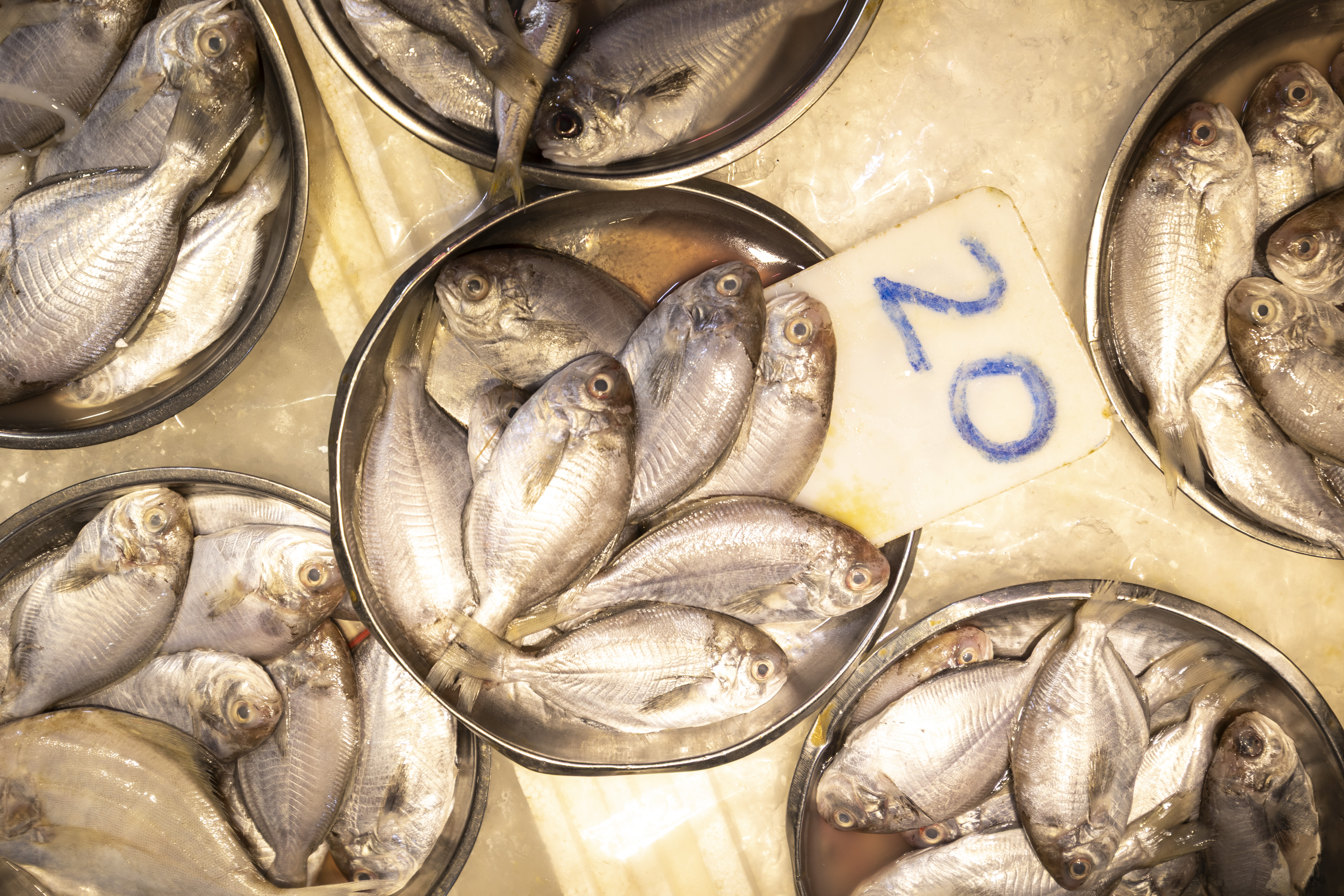
Price, too, is a major point of concern. When two silver pompanos lie before you in the market, one costing 80 Hong Kong dollars, the other costing 30 something, most people would choose the cheaper one despite knowing how the pricier fish was more environmentally friendly or left behind lower carbon footprints.
Although some restaurants label their seafood as ‘environmentally friendly’ or ‘sustainable,’ the public will not be willing to consume them unless they understand what these labels really mean. It takes more education and promotion. Rather than putting consumers in the dilemma of cheaper versus pricier fish, I like to provide an alternative option for those who want to consume consciously. Milk fish, for example, is a good choice because you can make use of every part of it. I also recommend other herbivorous fish that feed on plants instead of meat. They are affordable, delicious and friendlier to the environment. I also recommend local spotted scats which have a mixed diet. Moreover, we can consume small fish that have a shorter life span and are more inferior in the food chain. For example, sardine production continues to be very high.
10. Has your relationship with fish and the ocean changed ever since you started documenting them?
My relationship with them has escalated from passion to a sense of responsibility. I used to just like fish in the past, but once I learned more about the species and delved deeper into the field, I felt the obligation to do something for fish and the fish industry. What I do might not benefit them right away, and I may not help with fish sales, but if I can make a change in terms of people’s values towards fish or promote an awareness of sustainability amongst the public, my effort pays off.
To be honest, I still feel that I don’t know enough about fish. The more I interact with those who are actually in the industry, the more I realise that my knowledge is shallow. There is much to learn from the ocean, from fish vendors in the market and from fisherfolk. Working with this range of stakeholders, I can only make sure that I do my part well. I will endeavour to document what I know, as substantially as I can, in the foreseeable future.
Afterword
In the interview, Keith went into detail about his childhood memory of marble fish giving birth to babies. Here is an excerpt:
‘If you look up marble fish online, you will see pictures of fish with big bellies. This is how they look naturally, so you don’t have to suspect them of pregnancy. One Sunday morning in childhood, I woke up early to prepare for church. The first thing I did, as always, was to check in on the fish tank. I was only a kindergarten kid at the time, but the following scene really left an impression: The living room was dim. I had placed the fish tank on the windowsill. When sunlight gleamed through the waterweeds, I saw a school of newborn fish swimming right before me. Wow! The feeling of life being born in front of my eyes! That was a magical moment—shocking, even!’
When Keith was still a child, he would never have imagined that fate would tie him even closer to fish as he grew up. Little did he expect that he’d go on to study fish and pursue marine education as he moved forward. Reminiscing about this important moment in childhood, he thought in retrospect, in his own words, that this was ‘the moment his life really began.’
Having liked fish at such a young age, Keith hardly found pleasure in his general studies textbook in school. He also failed to find anything that suited his needs in the public libraries. When he grew up, he wrote a book himself, making his childhood dream come true—he wrote the book that he most needed as a kid, offering readers an accessible entry point to the world of fish.
As Keith wrote in the introduction of his book, with a sense of humour, ‘If fish went extinct someday, I would be unemployed. What’s worse, I’d lose my purpose in life.’
Keith loves fish, owns fish, eats fish, goes fishing and researches fish … For sure he will continue to document stories of Hong Kong wet market fish in the years to come.
Tips from Keith
How to Take the First Step
It’s best to first learn the rules in play in a wet market. The Kanzaiding Fish Market that I used to frequent was always rainy. It was a market that sold marine fish, but raindrops consist of fresh water. The vendors constantly worried that their fish would be covered with too much freshwater and lose elasticity. Their eyes might turn cloudy as well, affecting their attractiveness. Therefore, it was better not to hold an umbrella while you were in the market, avoiding raindrops falling on the fish. This is basic etiquette.
This applies to wet markets in Hong Kong as well. If you are not going to buy something, don’t press or touch a fish. If you are interested in knowing more about something, do approach a vendor and ask them about their background, such as how they operate their boats or where they fish. Chatting is the first step to building a solid relationship.
Suggestions for Beginners
To start with, one should feel lucky to have encountered marine education and taken an interest in the field. A lot of people are still figuring out what they are doing with their lives. Since you already know what you want to pursue, do not let fear stop you.
The marine economy is not central to Hong Kong but we do not lack jobs and opportunities related to the ocean. Government departments, aquariums, educational workshops, and even private corporations need people with a talent in marine studies. In other words, your pathways are not narrow at all. Of course, everyone needs to make a living, but we shouldn’t abandon our passion and aspiration just because of the uncertainties of the future.
My second tip is to increase exposure and accumulate experience. We are lucky in Hong Kong, in a sense, because we have opportunities to be in touch with fish quite a lot. In the Goldfish Market in Mong Kok, for example, you get to see lots of ornamental fish from all around the world. The environment of wet markets has improved a lot as well, allowing you to take a walk in a comfortable, hygienic and air-conditioned space. These spaces give us a chance to be in proximity to fish, to observe their characteristics and to learn more from lived experiences.
Apart from making observations, it is important to be practical. Once you are willing to walk into a wet market and enter a new community through interacting with fish vendors and those in the industry, you may learn something you didn’t know before even through chatting. As long as you can show how professional you are and make those around you feel that you get along, you can keep asking questions and gaining behind-the-scenes insights. This experience lets you learn beyond books and research. You will soon find yourself in touch with the fishing industry.