No Item
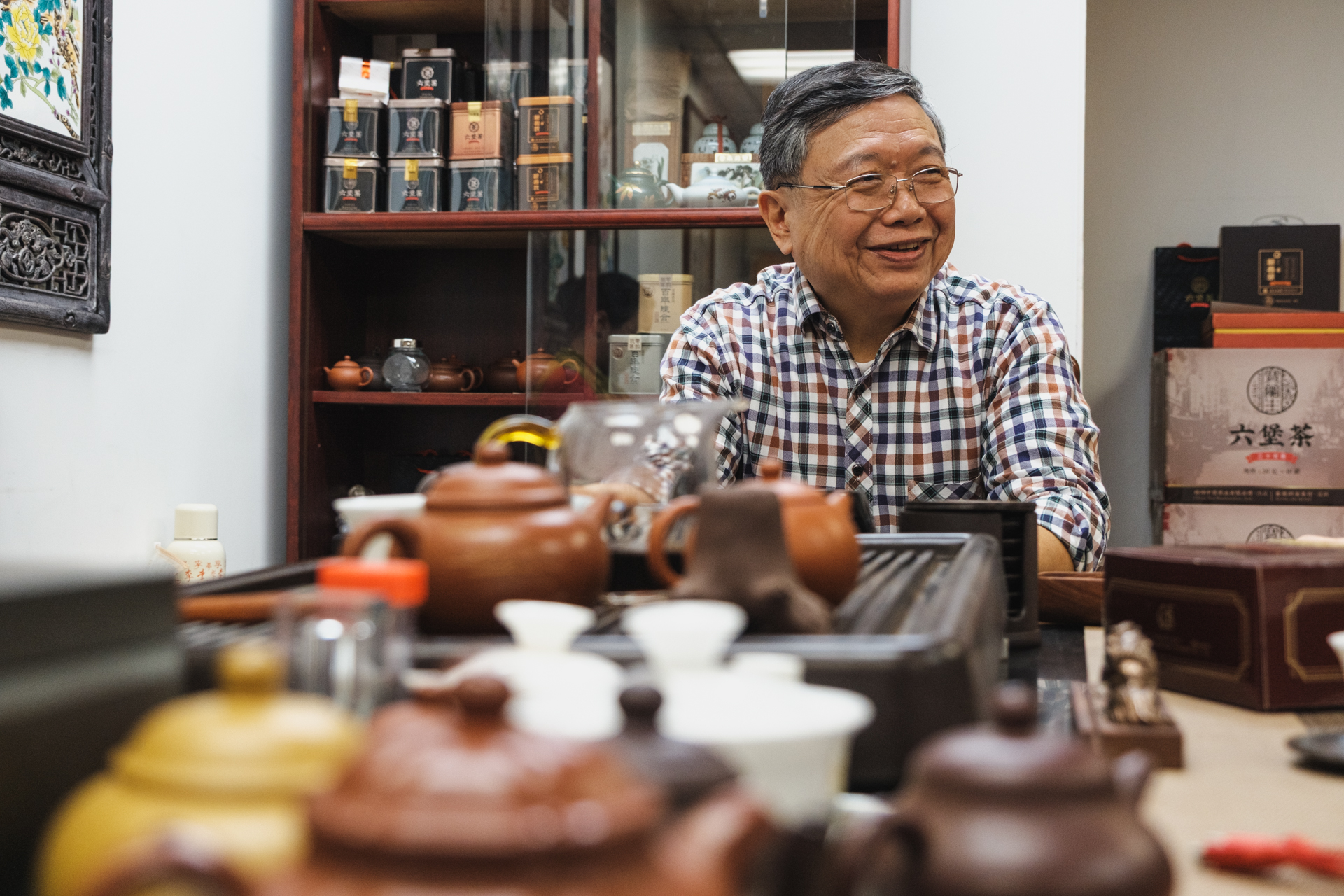
“Yum cha, yum cha,” said Sam Lee.
Tea looms large in Hong Kong, whether in its role in the Opium War that led to the ceding of the former fishing village to the United Kingdom, or in the everyday life of Hongkongers ever since. While tea has been crucial to Hong Kong’s past and present, the city also plays a significant role in the global tea trade and tea‑drinking culture. For more than a century, Sam’s family business has contributed to the trading of tea and the promotion of tea culture.
A hundred‑year‑old tea company
Sam’s family has been in the tea trading business since the early 20th century. The family business, Po Lan Sang Tea Merchants, had shops in Sheung Wan and Yau Ma Tei as early as 1915. The shop in Kowloon was looted during WWII. As a result, Sam’s grandfather opened another one on Queen’s Road Central and renamed the store Tung On Hong. “Tung On” was derived from the phrase “peace for all under heaven.”
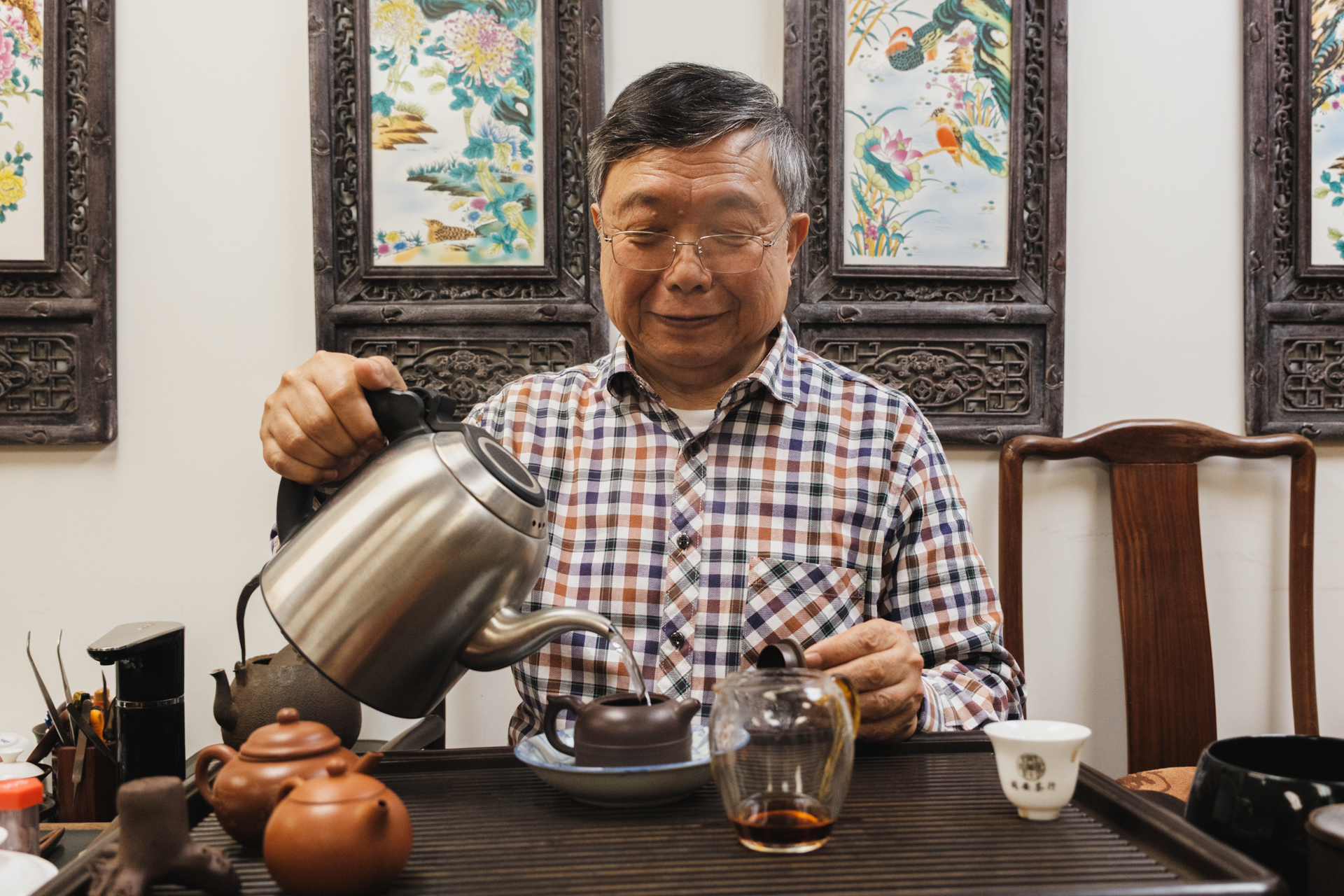
After Sam and his younger brother Simon took over the family business in the year 2000. In 2023, they combined the two names, calling it Po Lan Sang Tung On. Po Lan Sang is the brand they use in mainland China, while Tung On is the name they use for the Hong Kong business. The fourth generation is still based in Sheung Wan, while running a shop on Canton Road, as well as an office and plantation in Xishuangbanna, Yunnan, and cellars in Dongguan and Yuen Long.
“I only joined the family business in the mid‑1990s when I was nearly 50 years old. I studied electronic communication in Australia and lived there for many years. Father was getting old and thought it was time I started learning the business seriously to succeed him,” Sam recalled as he brewed Pu’er for us in the Sheung Wan office.
Lining the walls of the office are glass‑door cabinets where Pu’er teacakes are displayed. Many are older than members of the Urban Diary team.
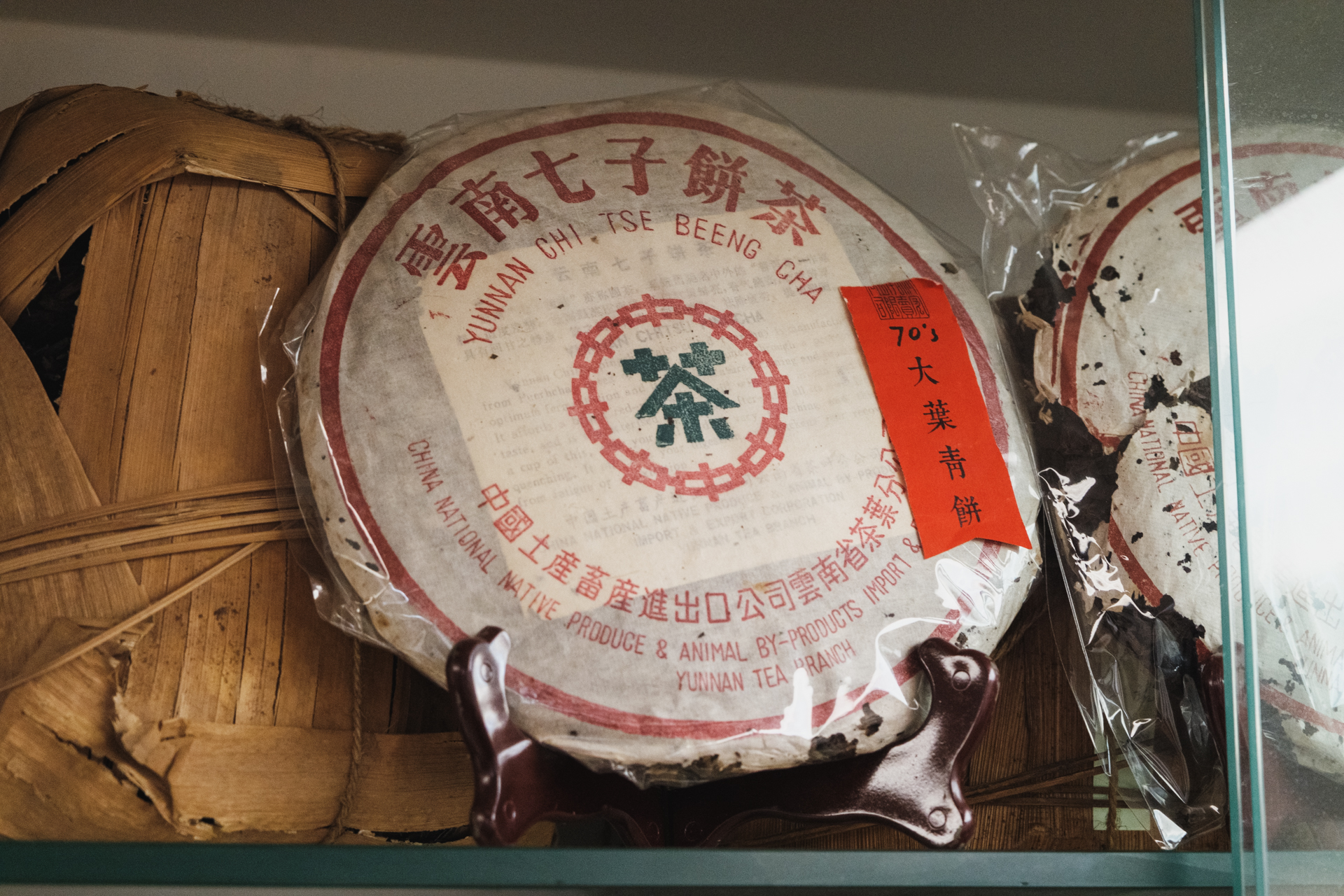
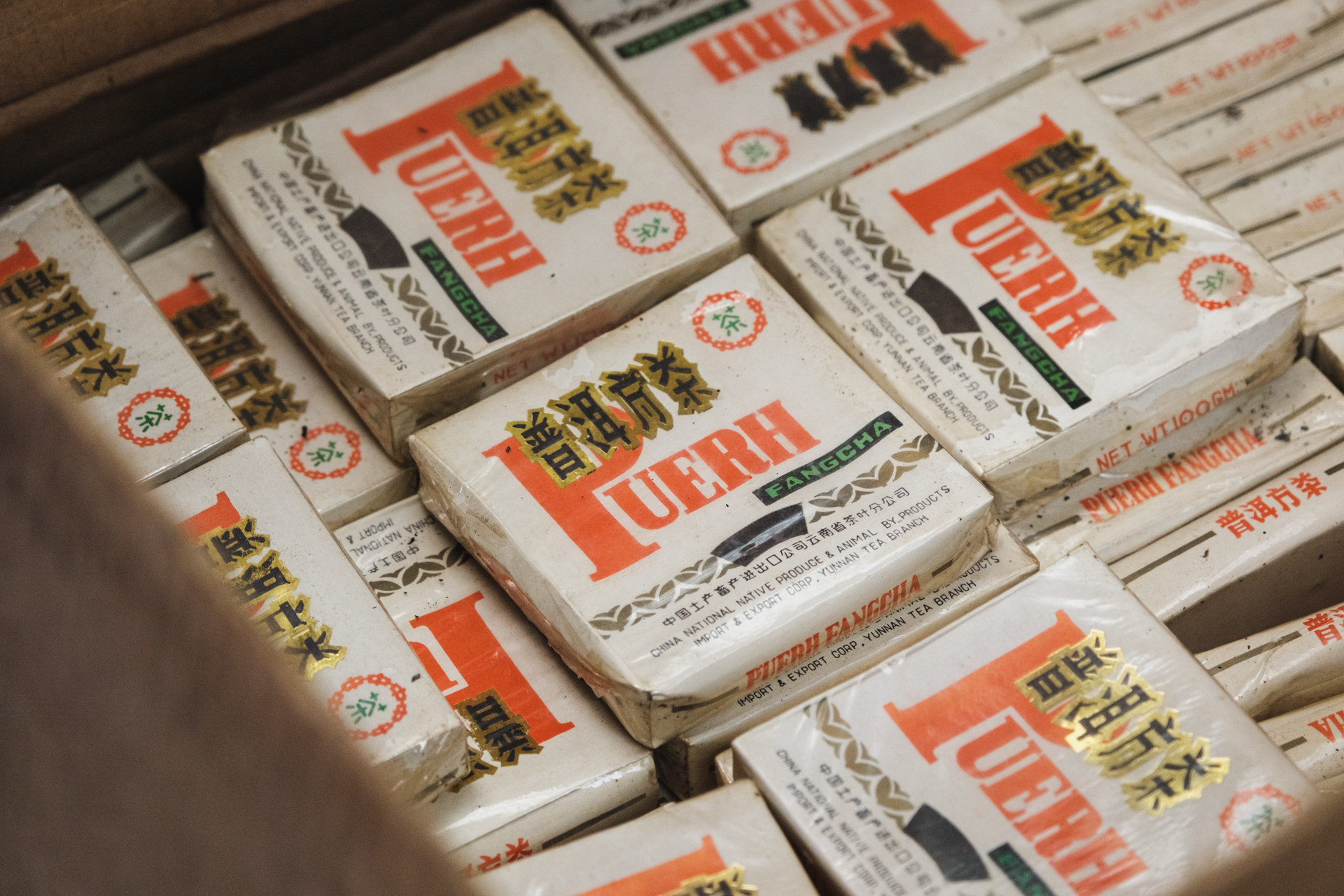
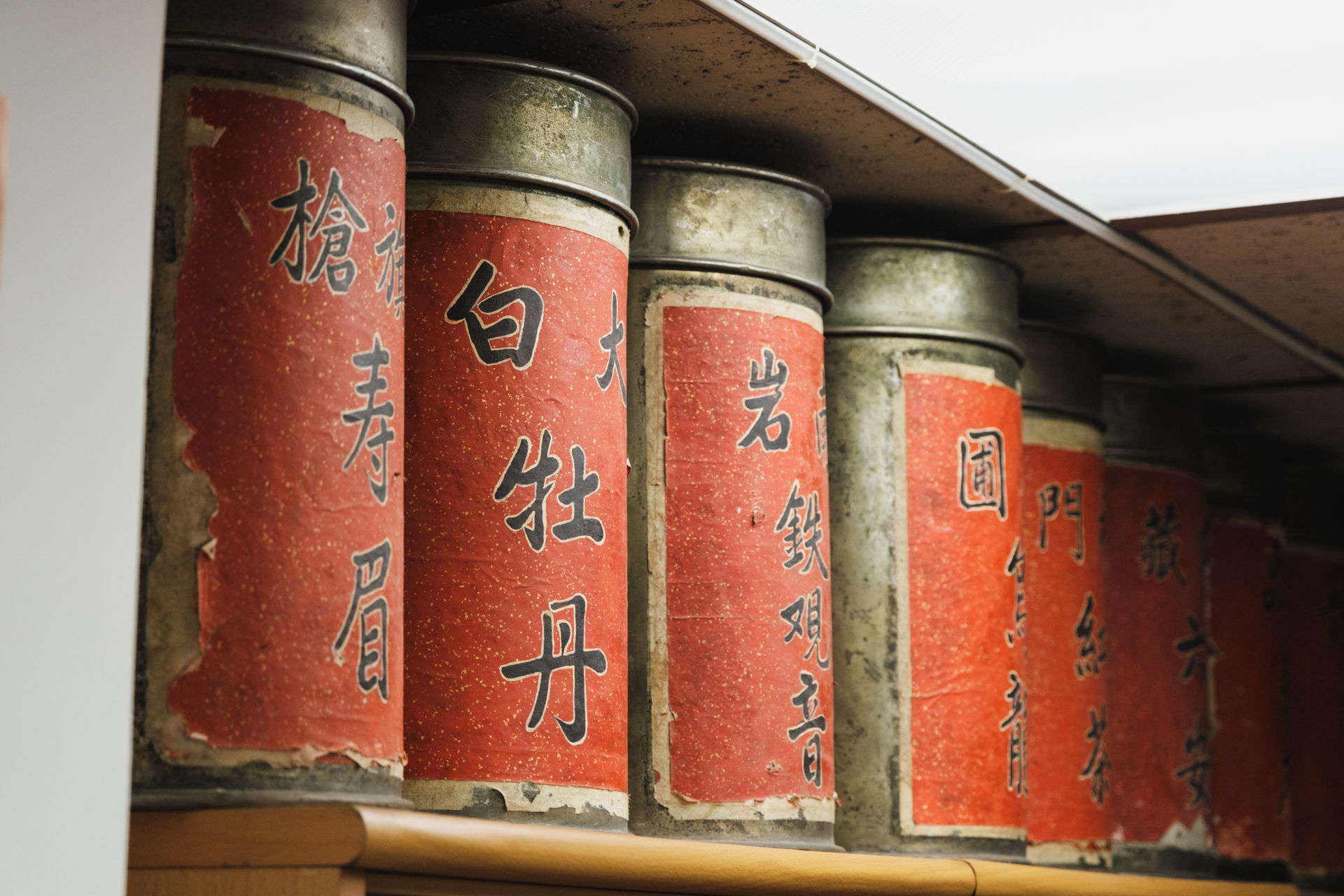
Sam wanted us to taste the Pu’er he blended using tealeaves the company had sourced from various origins. “The clients were more knowledgeable than me when I first started working under Father,” he said. Now, Sam takes pride in the Pu’er he blends.
Tung On is a wholesaler. For the tea to taste rich, smooth, and stable, the company sources tealeaves, then blends and ferments them. Sam said that tea from Xishuangbanna is the best, but historically, the company has also sourced tea from Vietnam and Indonesia. “Since my younger brother stations in Xishuangbana, he sources tea there. We no longer source tea from other places,” Sam said.
For four generations, Tung On has imported tea from plantations and carried out blending and fermentation in Hong Kong. Some of the tea is sold to local retailers; the rest is exported to mainland China, Southeast Asia, and European countries.
Hong Kong‑Stored Tea
A uniquely Hong Kong fermentation technique is among the knowledge Sam has acquired over time. Hong Kong‑Stored Tea is a signature approach to maturing Pu’er, and Tung On is a prominent practitioner of this method. Their tea is sold in auction houses across Asia. The tea Sam brewed for us was aged using this technique.
In the 1950s, tea merchants adapted their storage method to the city’s hot and humid climate, refining a natural aging process. As a result, this method gained a distinguished reputation among experienced tea drinkers across the globe. “When tea merchants sell tea, they can’t instantly sell all the tea imported, so they must store it in cellars. Gradually, the tea merchants discovered that Hong Kong’s hot and humid climate can accelerate the aging of Pu’er,” Sam explained.
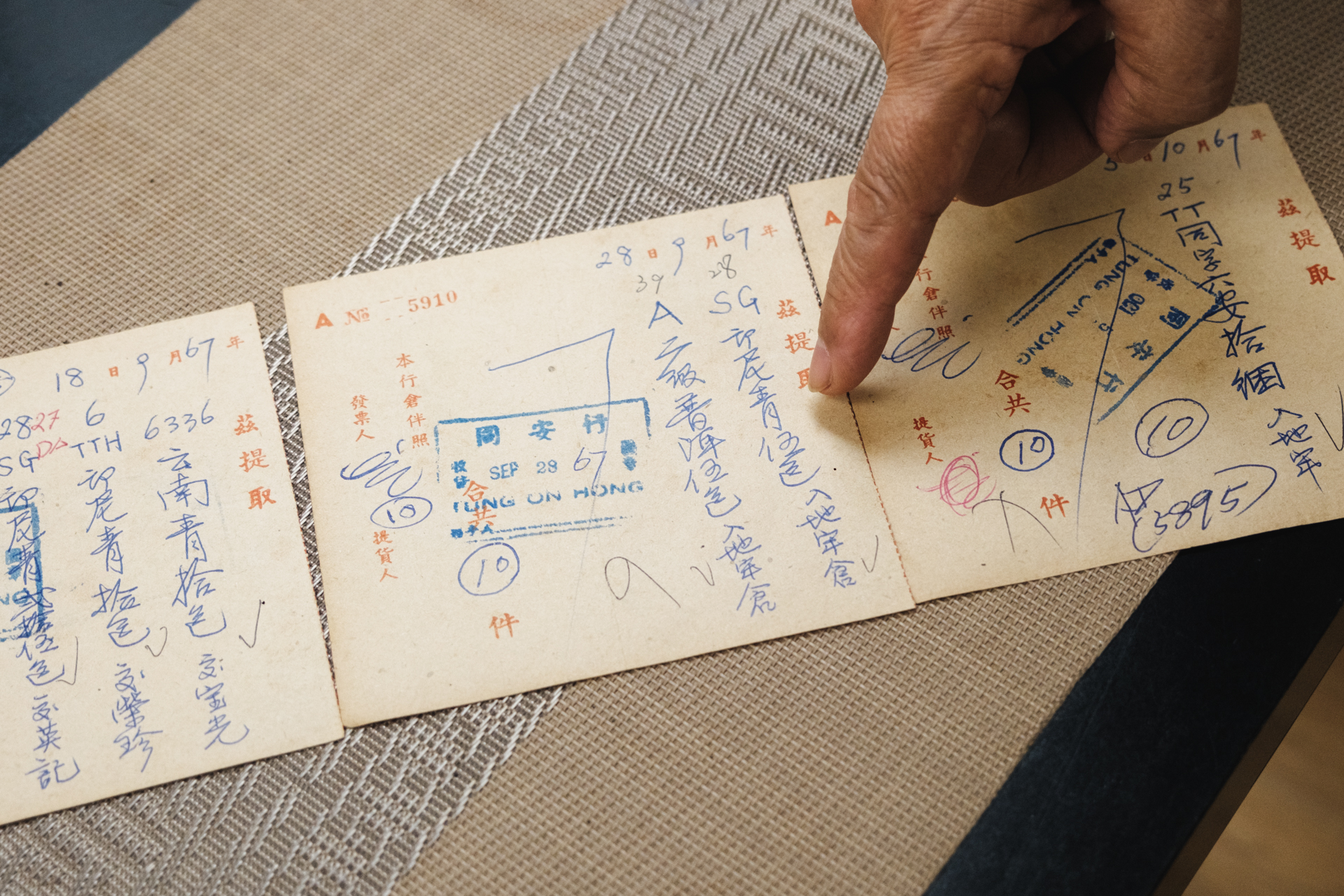
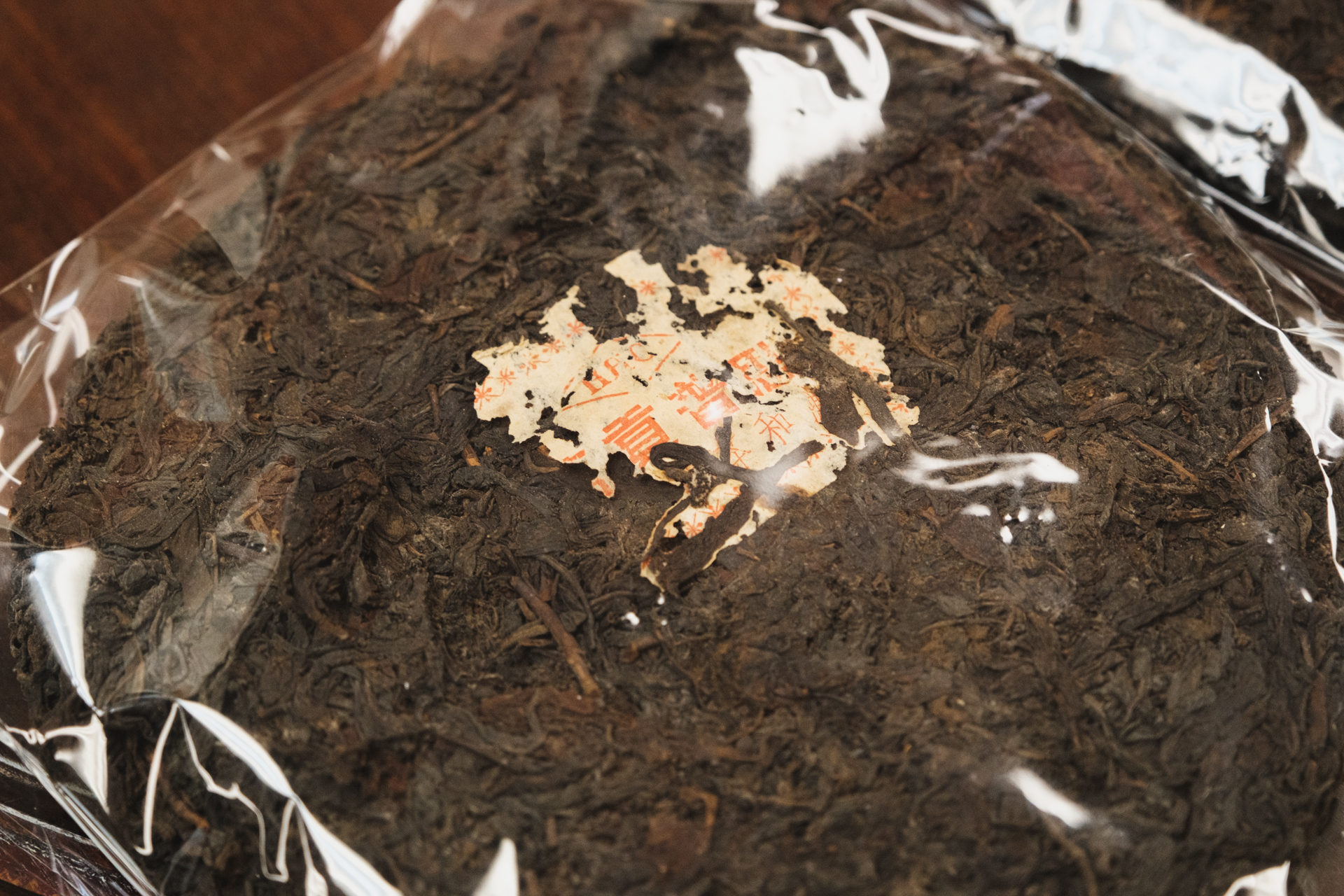
The method involves controlling the temperature and humidity of the tea cellars. This technique speeds up fermentation and creates a richer, darker flavour in a shorter period. In the world of Pu’er, the older the tea, the more fragrant—and the pricier—it becomes.
To fully appreciate the Hong Kong way of Pu’er fermentation, we go back to the two main types of Pu’er: Raw and Ripe. Each type has a large crowd of followers. High‑quality teacakes of either type are sold at premium prices.
Raw Pu’er is made the traditional way and does not involve fermentation. Tealeaves are left to wilt, then lightly heated and sun‑dried. The liquor of Raw Pu’er appears yellowish‑green and tastes refreshing. From a traditional Chinese medicine perspective, it is classified as “cool.” Ripe Pu’er is produced using a modern method. Through fermentation, the taste, colour and medicinal properties of the leaves change. The result is deep reddish‑brown leaves that produce crimson‑coloured tea. The liquor tastes smooth and soothing, with “warming” benefits that ease digestion. Hong Kong-Stored Tea is attributed for inspiring the commonly practiced “wet-piling” method that emerged in Yunna in the 1970s.
“In the past, coolies were heavy tea drinkers. They drank a lot of tea after a hard day’s work. If it was Raw Pu’er, their bodies couldn’t handle it. They had to drink Ripe Pu’er. That was how Ripe Pu’er came into the picture,” Sam said.
At the age of 73, Sam hopes more people will appreciate Hong Kong tea merchants’ role in developing, maturing and shaping the way Pu’er is consumed around the world. Tung On has applied for Hong Kong‑Stored Tea to be recognized and listed as an intangible cultural heritage of Hong Kong.
Did you know?
In the days before highways were common, tea leaves from Yunnan were transported to Hong Kong by boat, transiting through Hanoi. These leaves were known as Yunnan Green. As we spoke, we realised that Hong Kong has long been not only a major destination for tea, but also a vital entrepôt in the global tea trade.“In the past, tea was cheap. Tea leaves from Yunnan were loaded onto boats and began their journey on the Lancang River. They travelled south along the Mekong River in Vietnam, were transported to Hanoi, and then loaded onto boats bound for Hong Kong,” Sam said.
Tea merchants in Hong Kong, such as Sam’s grandfather and father, would process Yunnan Green into the tea consumed in restaurants and homes. Large quantities would then continue their journey to cities in other parts of the world.