No Item
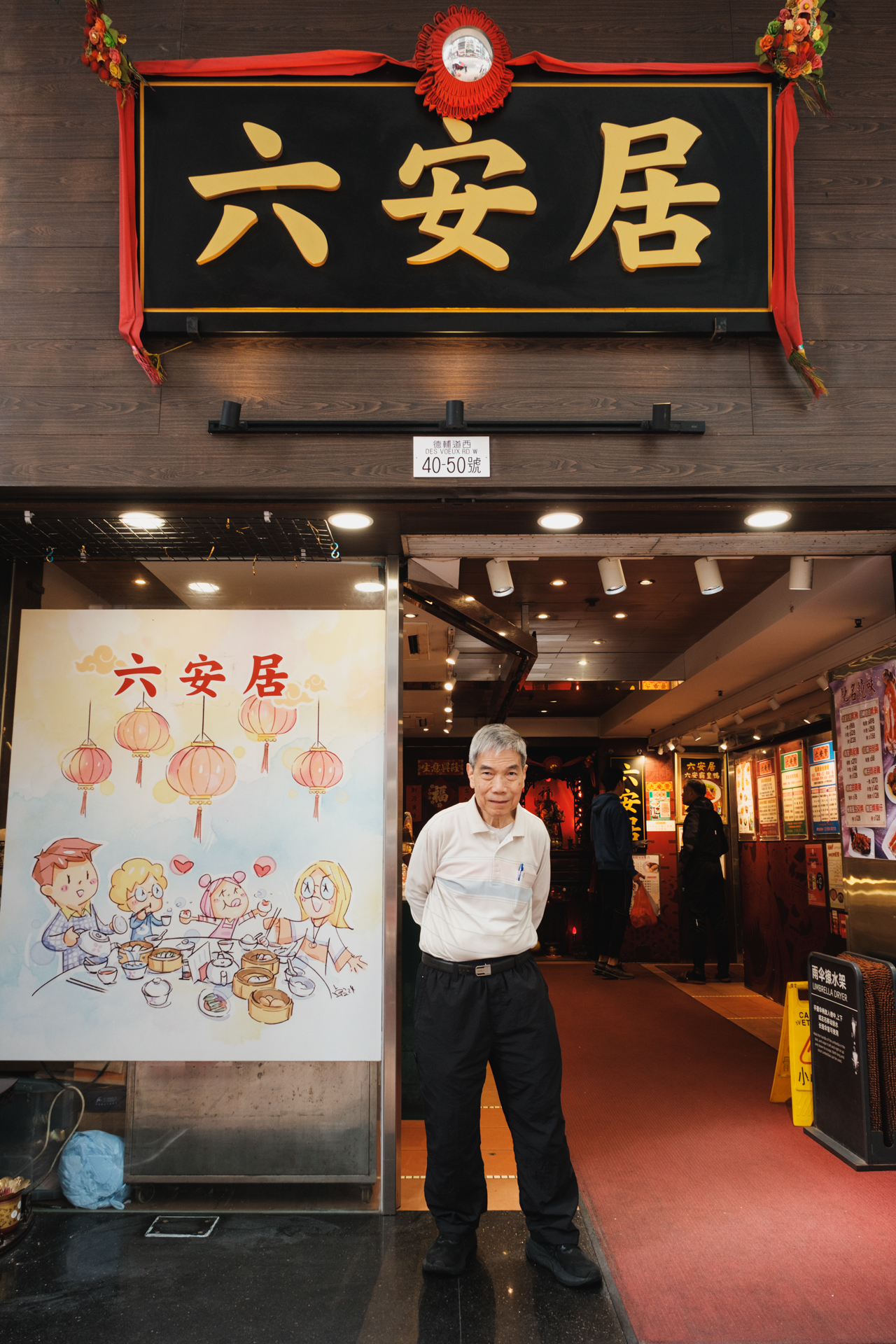
Standing near the tram line in Sheung Wan, Luk On Kui has for years preserved the layout of selling Chinese pastries on the ground floor and running a teahouse upstairs. On weekday lunch hours, a constant line of people drawn by the restaurant’s reputation queues up, waiting their turn for the lift upstairs to enjoy tea and dim sum.
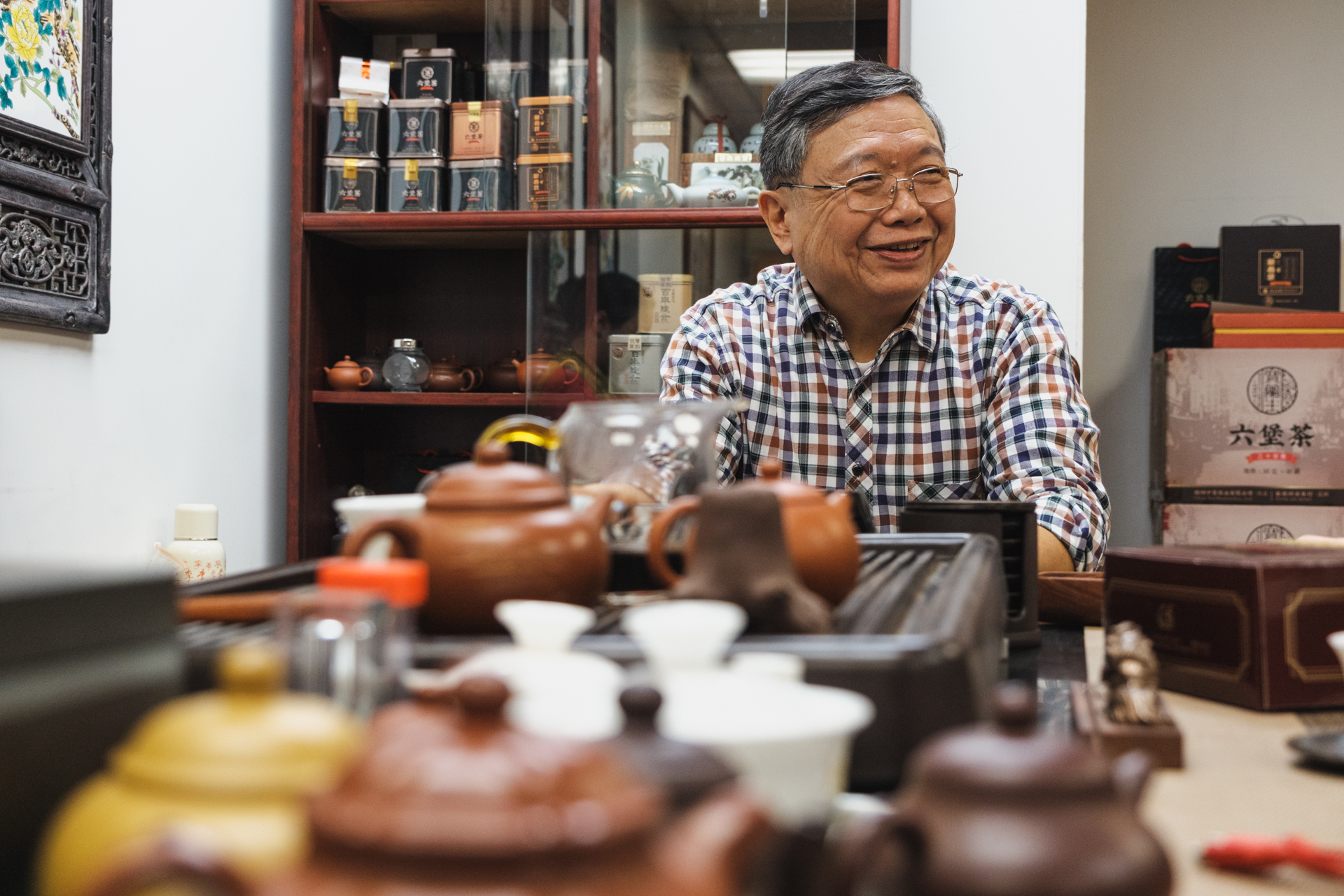
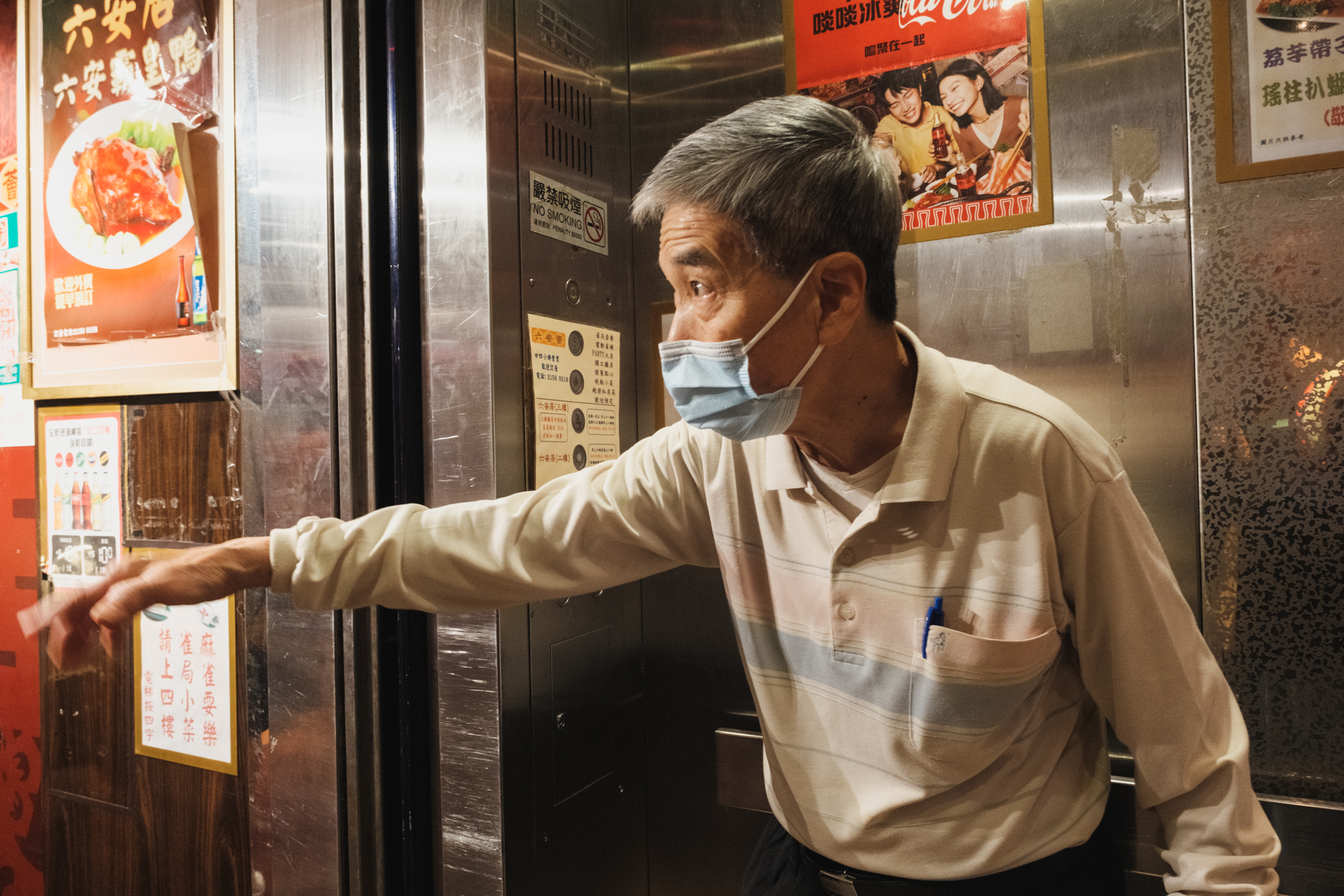
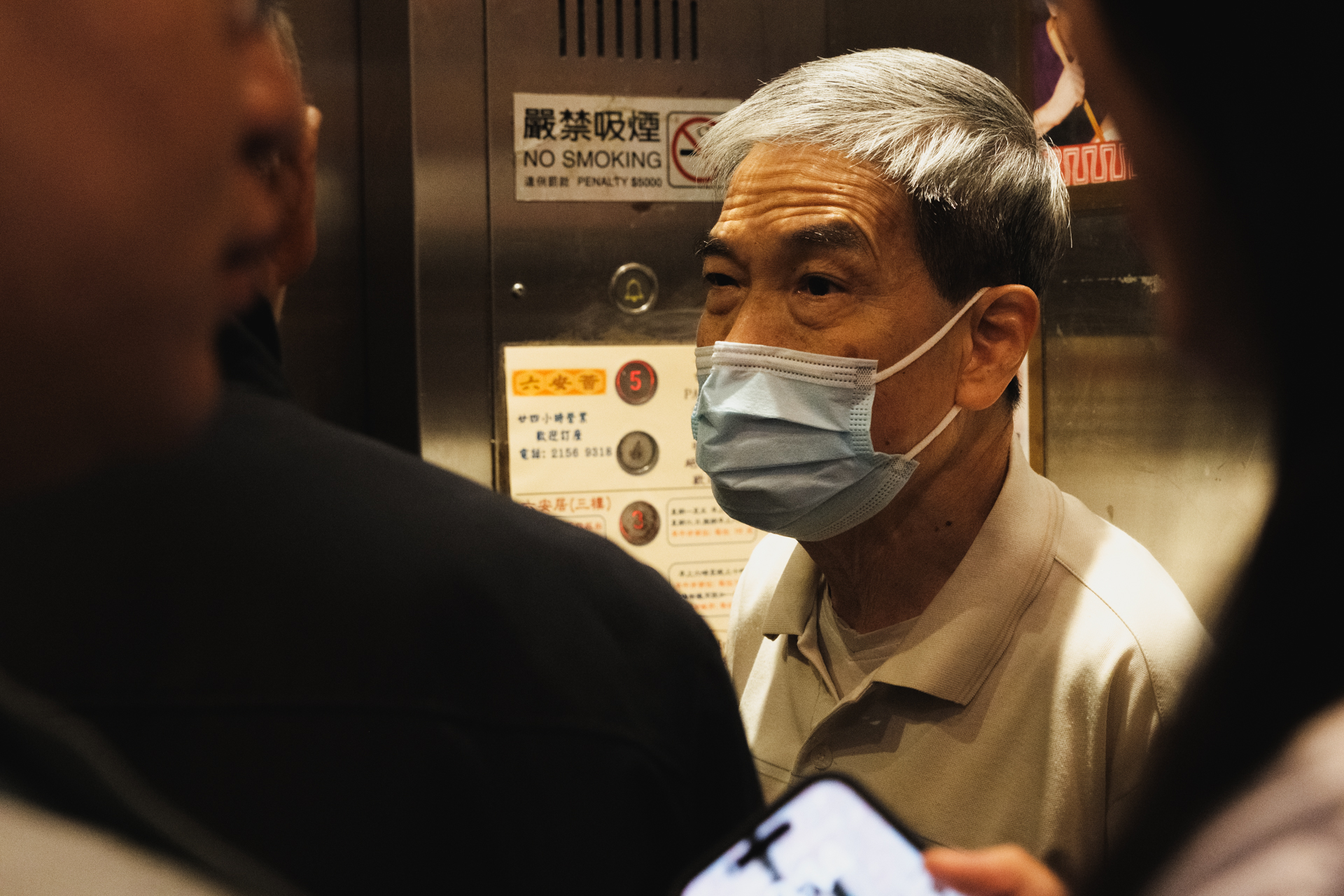
As soon as the lift door opens, we are greeted by Wong Pak-wing, a white-haired man in a mask. People call him Uncle Wing. “Come in. Which floor? Which floor?” His movements and speech are equally swift. Before diners can react, he is already guiding them to different floors. Occasionally, he greets tourists in somewhat broken Mandarin or a few words of English. He quips that operating the lift is his way to stealthily gather customer feedback. “I’d ask people: ‘Delicious food? Delicious food?’ Sometimes I am told that my colleagues have been telling off someone.” Unless you are a regular, who would ever guess that the man operating the lift is actually the owner of the restaurant? He does this every day, starting at noon and spending over an hour on lift duty - this is how he gathers intelligence firsthand.
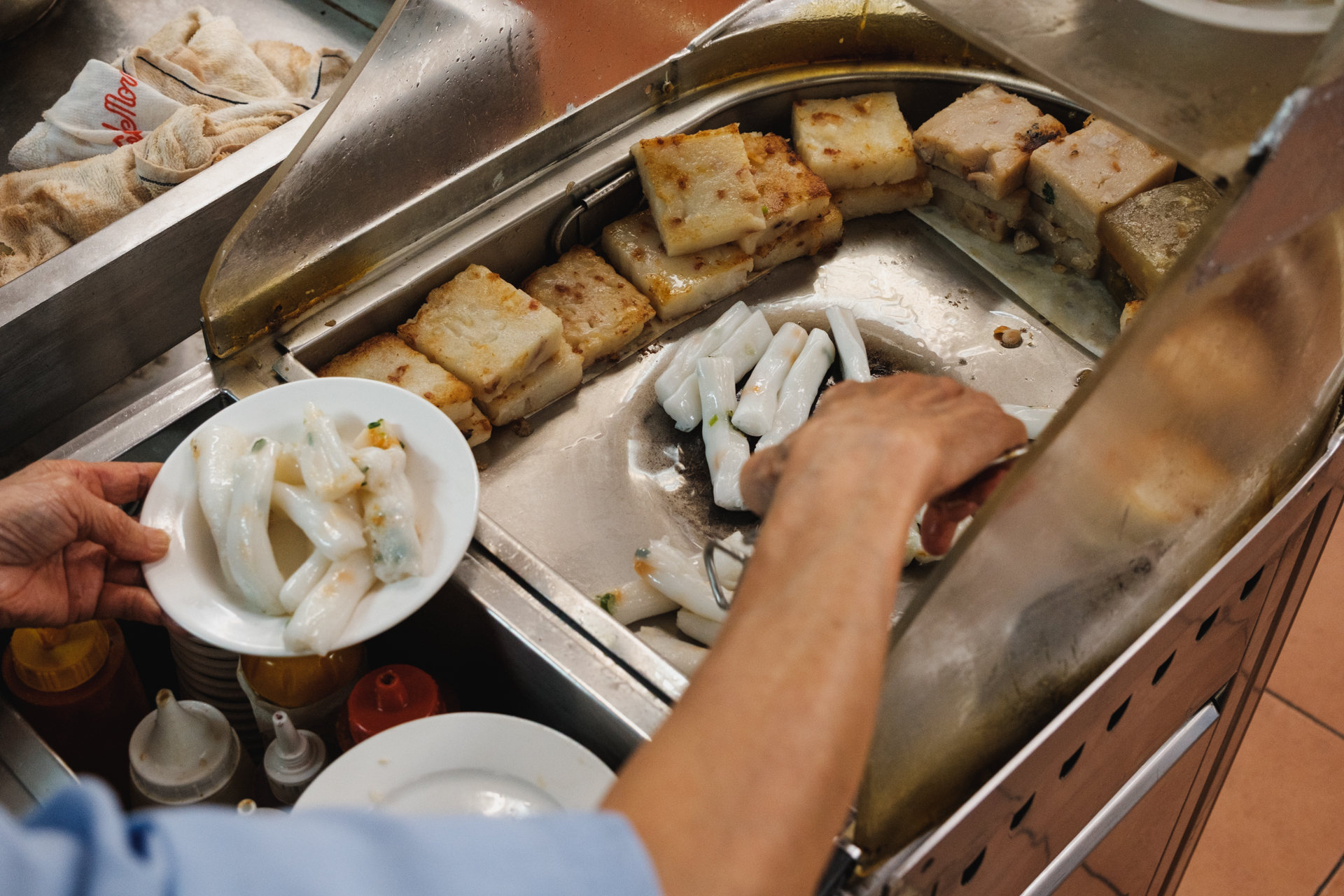
Sheung Wan was the main Chinese settlement and trading hub in the early days of colonial Hong Kong. The earliest documented dim sum restaurant was Yeung Lan Kee in Lan Kwai Fong dating back to the 1850s, followed by the opening of well-known establishments such as Hang Fa Lau, Ko Shing, Sam To, Tak Wan and Tak Ming. Until the 1930s, dim sum restaurants in the city were mostly clustered in Central and Sheung Wan before spreading to other districts (1). Today, yak chung leung kin (literally “one bowl with two pieces”), a colloquial expression for having tea and dim sum in a local dim sum restaurant, is embedded in Hong Kong culture. Families order dim sum items from paper checklists, and servers deliver the dishes. Luk On Kui, however, is a rarity - it still uses the traditional carts carrying bamboo steamers of dim sum and other dishes, such as pork liver siu mai, prawn dumplings, steamed sponge cake and ham sui gok.
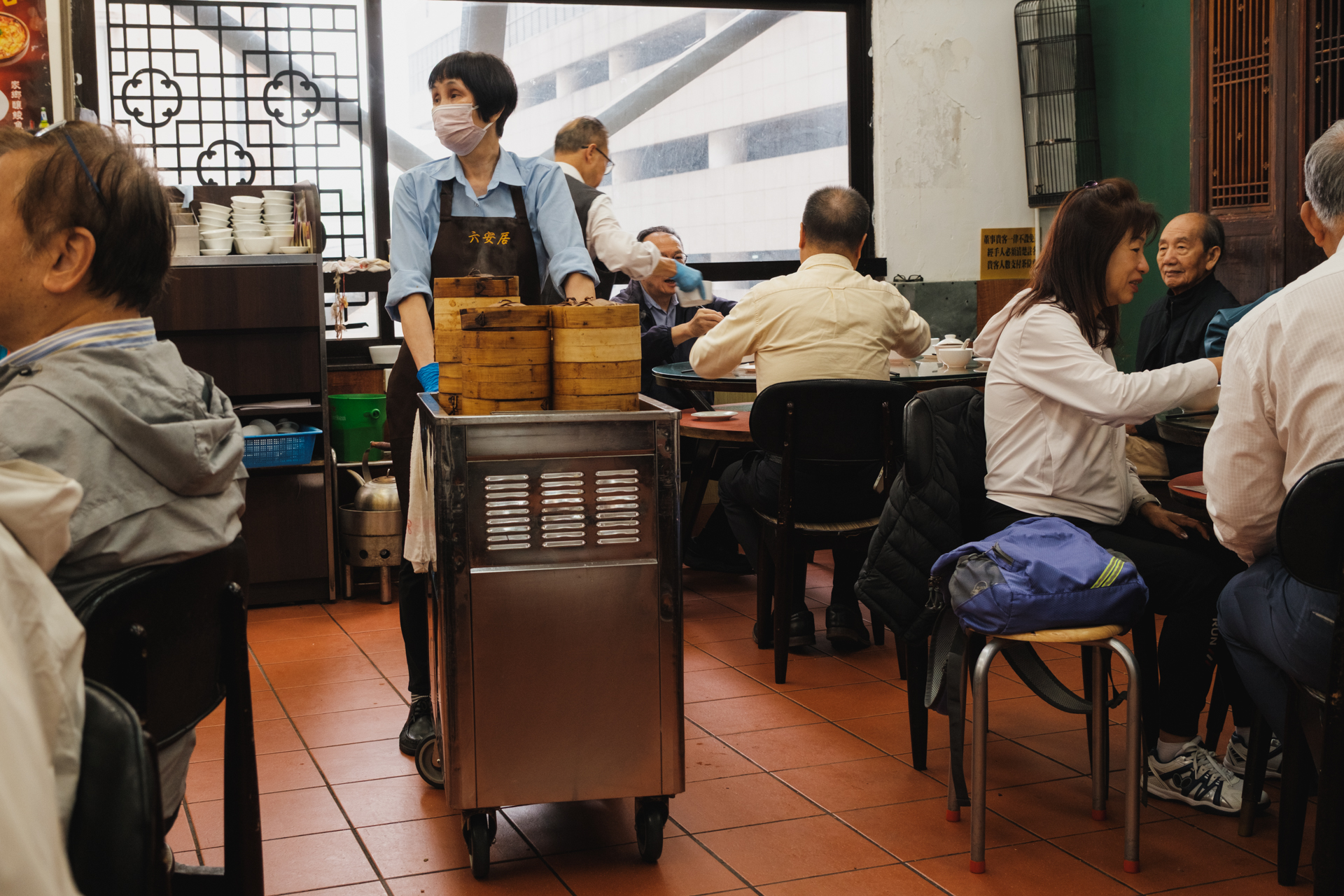
Many classic dim sum dishes, such as the much-loved soup dumplings, fly off the trolleys and one has to be quick, while sago pudding is a weekend-only treat. Despite the extensive menu, the restaurant firmly rejects trendy ingredients such as black truffle and edible gold. Uncle Wing makes it a point to “respect tradition and uphold it”.
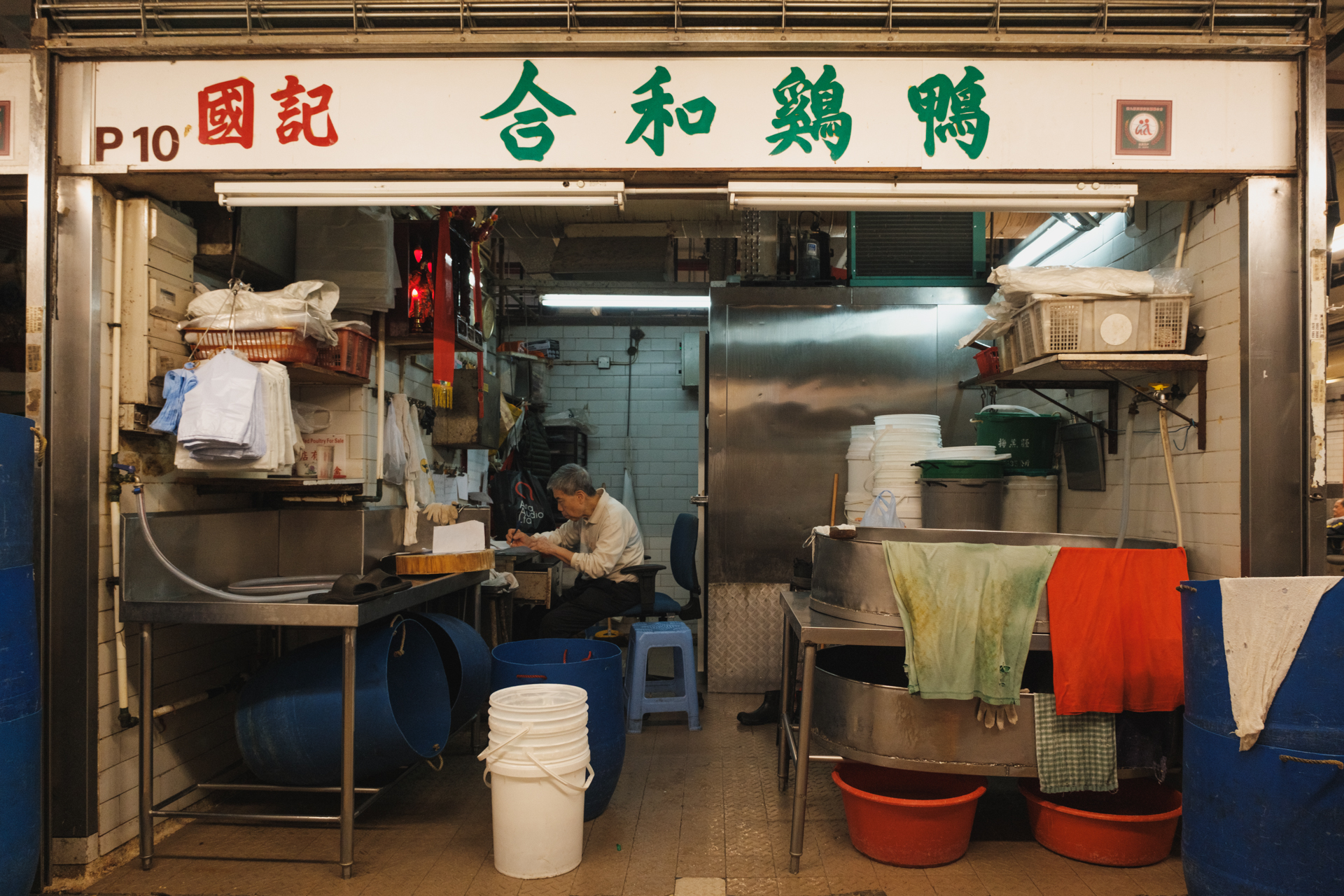
Uncle Wing’s family has run a poultry stall for four generations, starting in Guangzhou before the Second World War. They later moved to Hong Kong and continued the business. By the time Uncle Wing took over, it was already the third generation operating the stall. Unexpectedly, when he turned 60, his good friend Ngan Chuen-fai, the third-generation owner of Lin Heung Lau, invited him to venture into the restaurant business. Soon, Lin Heung Kui opened, and Uncle Wing ran it for 16 years.
Two years ago, the trademark licence for Lin Heung Kui expired, meaning the restaurant could no longer use the name “Lin Heung”. Uncle Wing originally planned to rename the place “Cha Heung Kui” (literally “Tea Fragrance House”), but a co-shareholder suggested naming it after Liu An tea (pronounced “luk on cha” in Cantonese), a classic Chinese tea. Uncle Wing did not mind it either way, so the “Lin Heung Kui” sign was removed on New Year’s Eve 2023. On January 1, 2024, the restaurant reopened as “Luk On Kui”.
Lifelong friends and business partners
With absolutely no relevant experience, why did Uncle Wing start a new venture in the restaurant trade at the age of 60? It all traces back to his close friendship with the late Ngan Chuen-fai. Both men had inherited their own family’s business. Uncle Wing ran a chicken stall with his father, while Ngan, who was a year younger than Uncle Wing, managed Lin Heung Lau with his father Ngan Tung-chun and other family members. The restaurant sourced fresh poultry from Uncle Wing’s father.
Later, Ngan Tung-chun became a business partner of Uncle Wing's father by investing in the stall. When Uncle Wing took over the stall, Ngan Tung-chun said to Uncle Wing’s father: “I’m done being your business partner. Let my son and your son work together instead.”
According to Uncle Wing, he and Ngan Chuen-fai were “brothers for life”. The two had known each other since childhood. “When he came to the market to pick up chickens, we would chat away. He drove around and I went along for the ride, and we went swimming together.”
Back then, Lin Heung Lau was a household name in Hong Kong, frequented by celebrities and prominent figures. In 2009, Ngan asked Uncle Wing to join him in establishing Lin Heung Kui. After a series of legal wrangles, both Lin Heung Lau and Lin Heung Kui were able to coexist.
The two-generation partnership lasted for over 50 years without a single argument. Tragically, Ngan passed away suddenly due to illness in October 2018. Saddened, Uncle Wing had no choice but to invite other shareholders to help manage the business. In 2022, the Ngan family ended their management of Lin Heung Lau. Today, the restaurant belongs to a new owner.
Uncle Wing feels wistful about Lin Heung Lau changing hands. All he can do is fulfil his own duties. He often says: “I’m not really a restaurant guy.” Indeed, the family chicken stall business is his roots, and he feels a strong sense of connection to it. Nonetheless, running a teahouse gives him a great sense of accomplishment. “We made it through the pandemic and the social unrest. We were lucky to have survived. We have more than 80 employees. That’s more than 80 families. We’re able to support them. I won’t boast about social responsibility, but I see these colleagues every day. They’re like part of my family. Isn’t it a good thing to be able to keep their jobs secure?”
Over the past few years, Hong Kong has experienced many ups and downs, from the protests in 2019 to the Covid-19 pandemic, which dealt a heavy blow to the local economy. Things only started returning to normal in 2023, but the trend of Hong Kong people shopping in mainland China now presents a new challenge.
Whether operating under the name of Lin Heung Kui or Luk On Kui, Uncle Wing’s restaurant remains a neighbourhood favourite. “The signboard is always there, but you still have to put in the work, or it will fall off.”
Now 76, Uncle Wing continues to work two shifts. He leaves home at 4am for the chicken stall. Around noon, he arrives at Luk On Kui to work for a little more than an hour. Then he takes some food from the restaurant to the stall for lunch and then settles the accounts. He does this every single day. “As long as my body holds up, I’ll keep going. It gives me a real sense of fulfilment!”