No Item
Interview: Miranda Chu|Photography: Tse Pak Chai | Translation: Harmony Yuen
Date of Interview: 30 December 2025
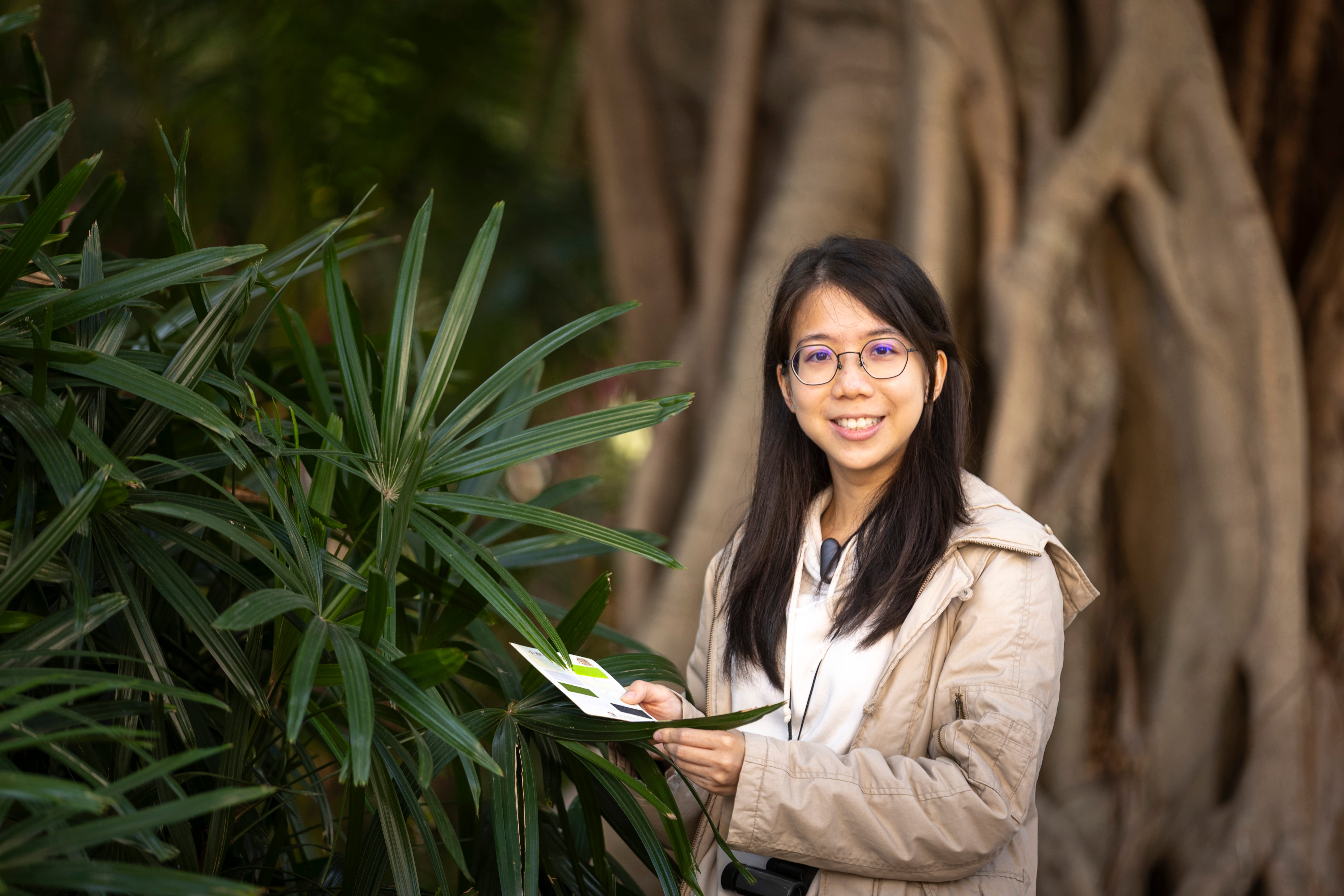
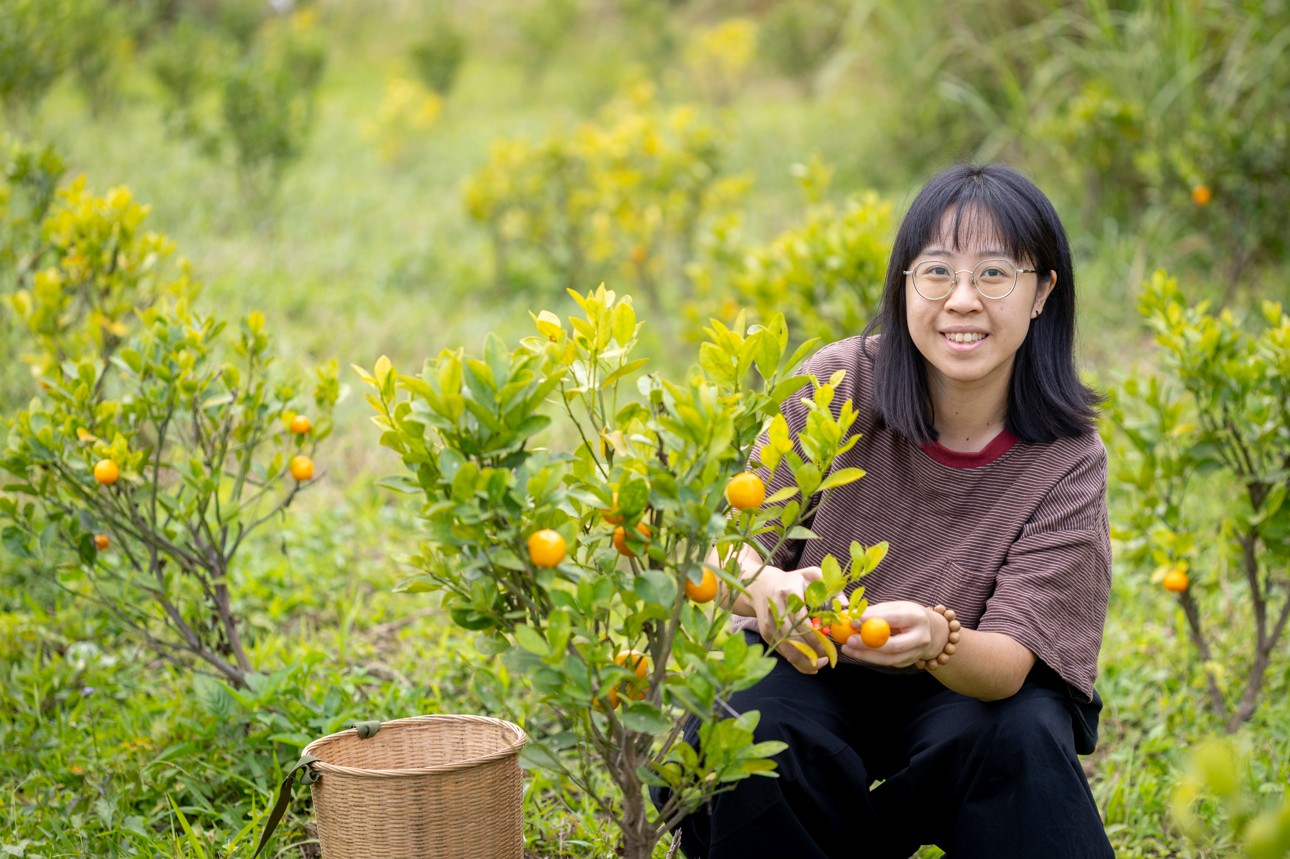
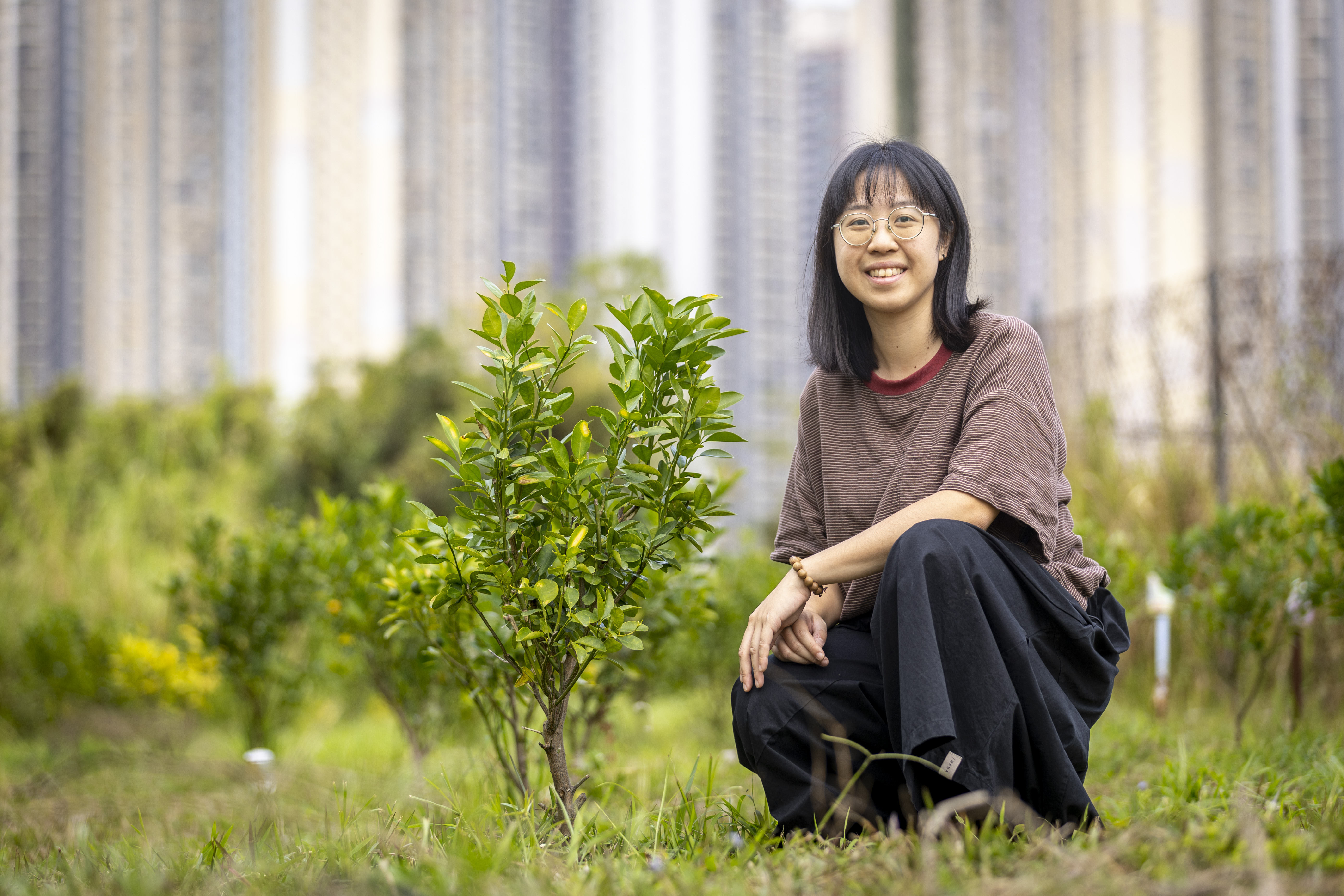
About Helen Cheung Hoi-lam
- In 2020, Helen graduated from the Chinese University of Hong Kong with a Bachelor of Science in Biology.
- In the same year, she moved to the Sheung Shui countryside and began working with local farmers.
- In 2024, she became a part of Oh My Guts Hong Kong to assist with the everyday maintenance of tangerine trees as well as other promotional and administrative matters.
- Helen also runs Sow & Grow, an initiative focusing on food and agriculture education. She designs and leads activities on food, nature education and village culture. She also organises community tours.
About Oh My Guts Hong Kong
- The project was first started in 2024 by a group of people who care about the environment and sustainable living. On a piece of farmland in , Sheung Shui, they give rescued tangerine trees a second life by re-planting them and harvesting them as ingredients for all sorts of processed food.
- Most of the trees used to be Lunar New Year ornaments that would otherwise have gone to waste after the festive season. The group then rescued them via the organised by the ’s , allowing unwanted pots to be transferred from shopping malls and housing estates to the farm.
- The growing process of decorative New Year tangerines normally involves pesticides. In order to grow them organically, the Oh My Guts team spends at least one year taking care of a rescued tree, allowing the plant to metabolise residual chemicals. They may then harvest tangerines that are good enough to meet food safety standards.
About Helen’s Workshop for Let Us Go!
- Theme | Farming Experience
- Date | 19 October 2025
- Event | Helen started by introducing the vision and everyday operation behind Oh My Guts, then split participants into groups to have a go at fertilising the trees. She also offered everyone some green calamansis, candied calamansis and calamansi jam to taste. This allowed participants to experience the production process and the end result of planting.
- Relationship with Satoyama and Satoumi in Hong Kong | City life tends to be segregated from nature. The way decorative New Year tangerines are neatly entrapped in pots and thrown away at the end of the festive season is a prime example. By extending the life of New Year tangerine plants, Oh My Guts shows us alternative ways of thinking about the possibilities and resilience of life, and how our everyday life can be in close proximity to nature.
Interview
1. How long have you lived in Sheung Shui? What made you want to move to the countryside and get involved in farming?
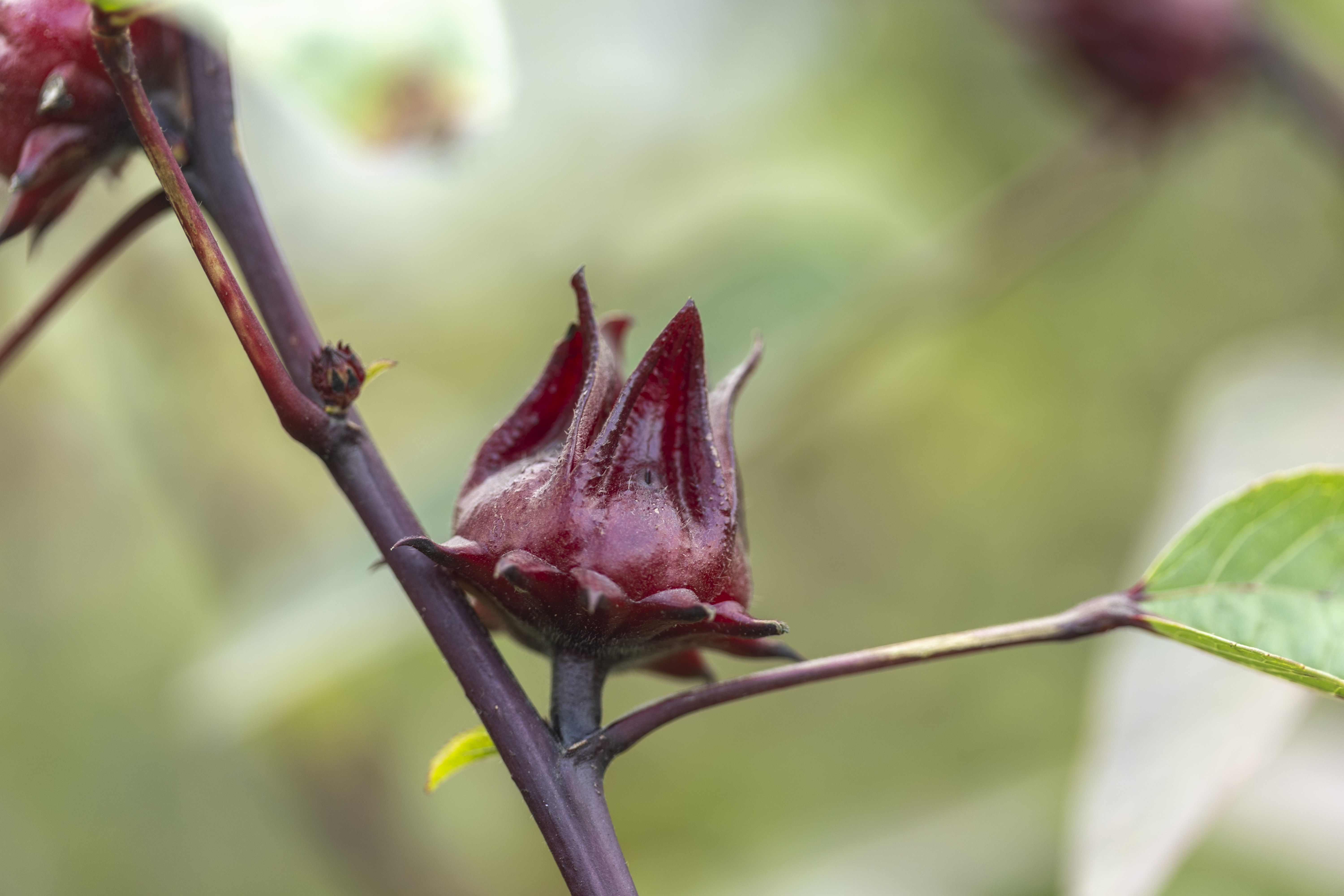
I moved away from the city and have lived in Sheung Shui for five years now. I chose an area that my friends and I call ‘Tai Ping Kai,’ shorthand for the three neighbouring villages known as Tai Lung, Ping Kong, and Kai Leng located in the Sheung Shui area, as a way to live closer to nature. In the past five years, I’ve been helping my farmer friends look after their farmland in Ping Kong Village, as well as taking care of the longan and white mulberry trees nearby. Recently I’ve started growing roselle, too.
I didn’t start off as one of those enthusiastic young farmers determined to pursue farming. There wasn’t any pressure or production KPI for me. It was a pleasant surprise how farming brought me closer to the piece of land I look after.
2. How did the Oh My Guts Hong Kong initiative come about?
Kit, who runs an organic farm called Sum Tin, had already been growing tangerine trees along the edge of his farmland for five or six years when I first met him. It was from him that I heard about receiving free tangerine trees through a recycling scheme, and that they are not costly to keep. All you need is a piece of land, regular watering, fertilising and pruning, and then you can just wait for the harvest. He thought it would be a suitable group activity for those who want to explore re-planting tangerines together, so he started the project and invited farmers, villagers and neighbours to join.
3. What made you want to become a part of the initiative?
Around a year and a half ago, I met Kit at a public event on food and agricultural education. He actively asked whether my friends and I wanted to participate, as we work on food and agriculture education as well. He’d prepared a whole proposal, outlining basic information about tangerines, what the programme entails and the division of labour in the team. Usually you’d expect just a verbal invitation for this kind of collaboration. I was surprised to receive a whole proposal. It showed how passionate and serious he was about the project!
I was also charmed by the idea that New Year tangerines could be reborn when you re-plant them in soil. I arrived at Tai Ping Kai with an experimental mindset, reminding myself to explore the place without fixating on any outcome. Growing tangerines seemed simple as opposed to other farming initiatives, so I happily agreed to give it a go.
4. How does the tangerine farm operate, and what is your division of labour like?
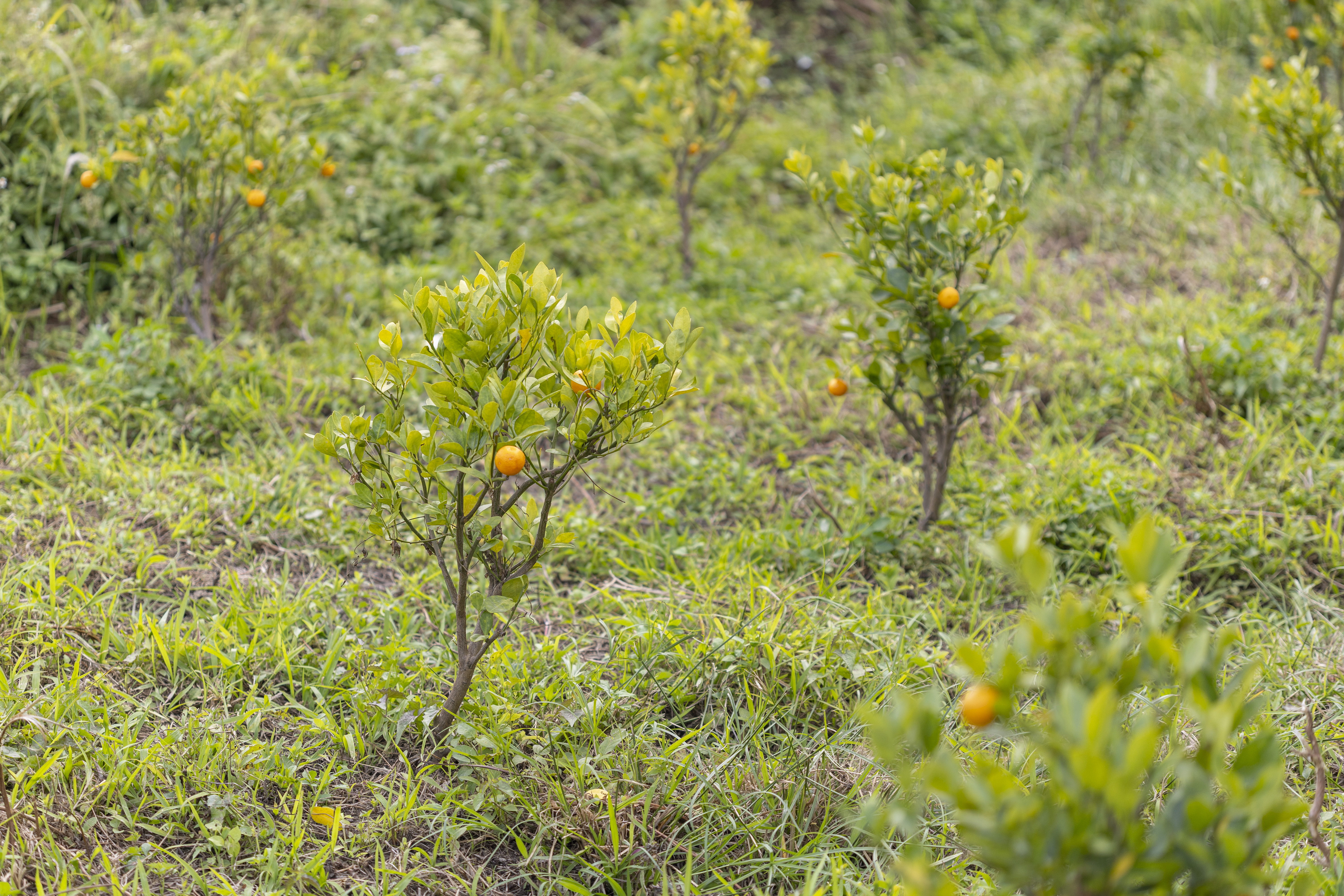
The farm is located in Ping Kong Tsuen, near the farmland I look after. There are around a hundred trees now, some grown from seedlings we bought in mid-2024, and others rescued at the start of 2025.
There are 12 active members at the moment, split into small teams based on our strengths. Teammates with the strongest farming skills handle fertilising, watering and pruning. I am in the food development team, and I work on publicity and administrative tasks as well. Finally, there’s a team that focuses on finances.
We meet once a month in someone’s home to go through our current vision and mission, as well as to deal with administrative tasks. We also brainstorm activities together. For the farming workshop we ran for Let Us Go!, for example, we held a meeting to discuss the details.
5. What happens between rescuing a tree and harvesting fruit?
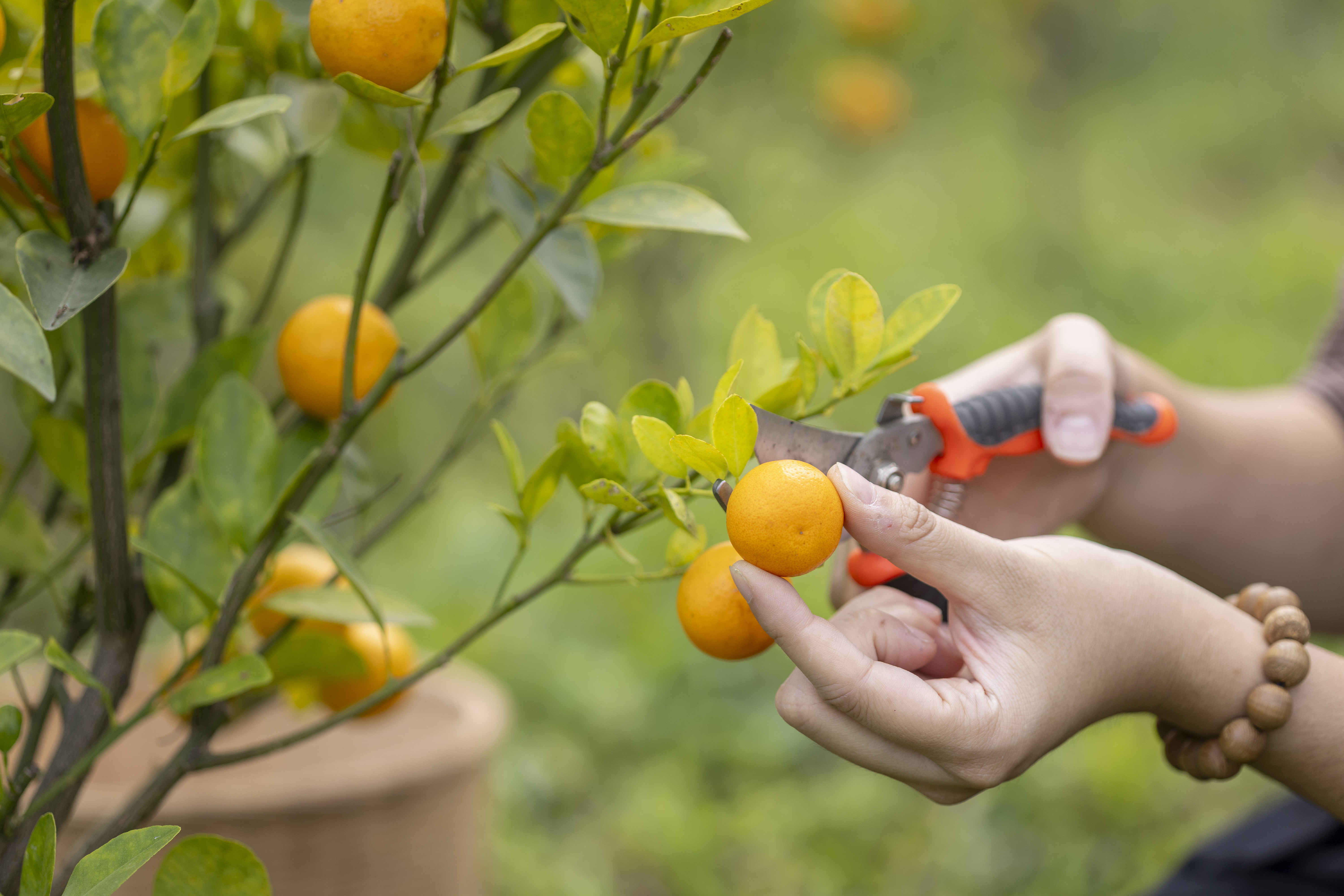
In March 2025, we organised a Tangerine Moving Day by recruiting volunteers to assist us with recycling the rescued trees. The trees were first moved to Sum Tin, where we stripped them of any decorative wire and bamboo sticks. We also cut away mouldy fruits and pruned each tree to around two-thirds of its original height.
In fact, these trees can naturally grow over two metres if you let them! But ours are a crop meant for sale, so quality and operational convenience are important. Pruning then becomes necessary, as it creates gaps between branches for air to flow through, which is beneficial for trees. If a tree doesn’t grow too tall, we won’t need to climb on a ladder each time.
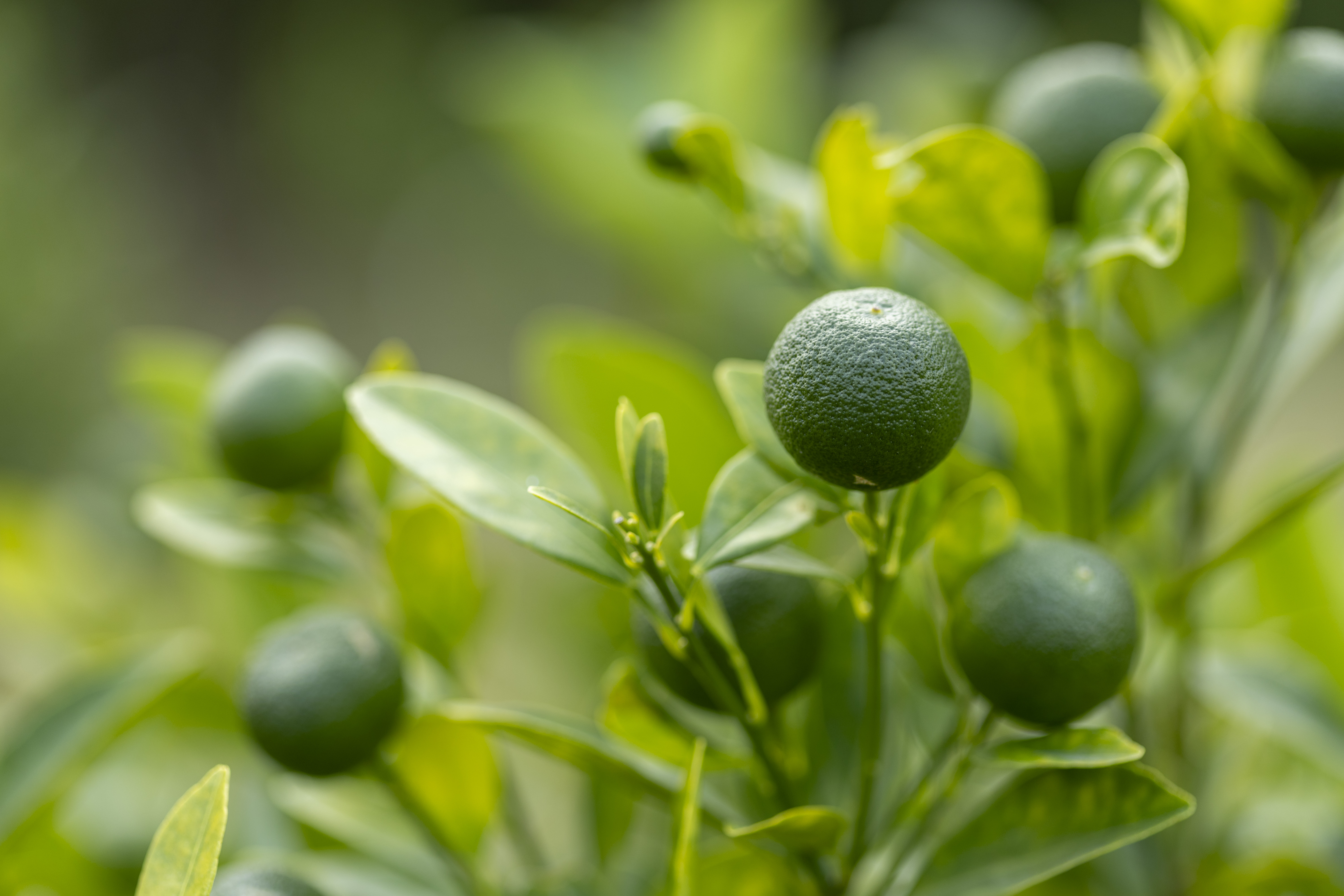
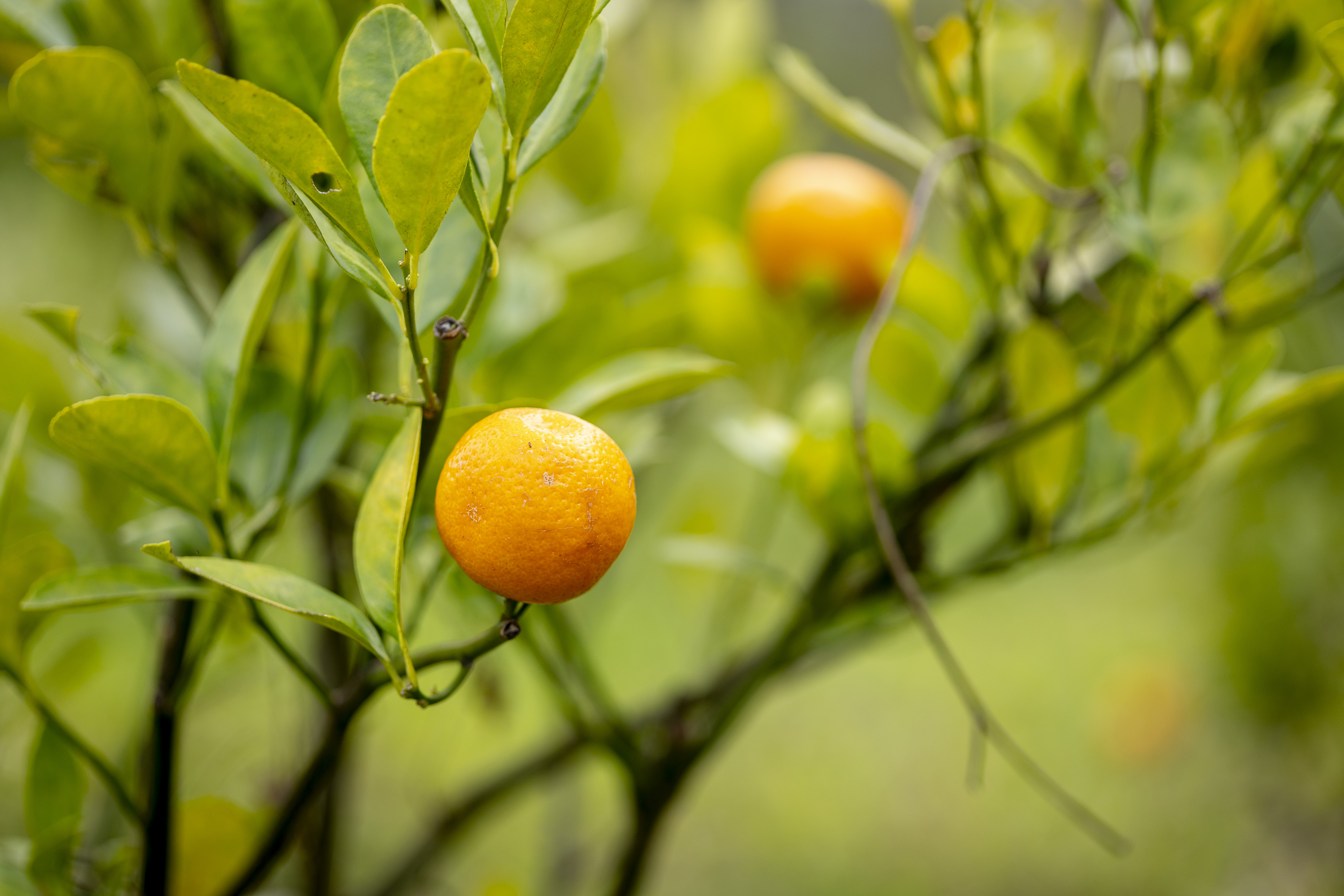
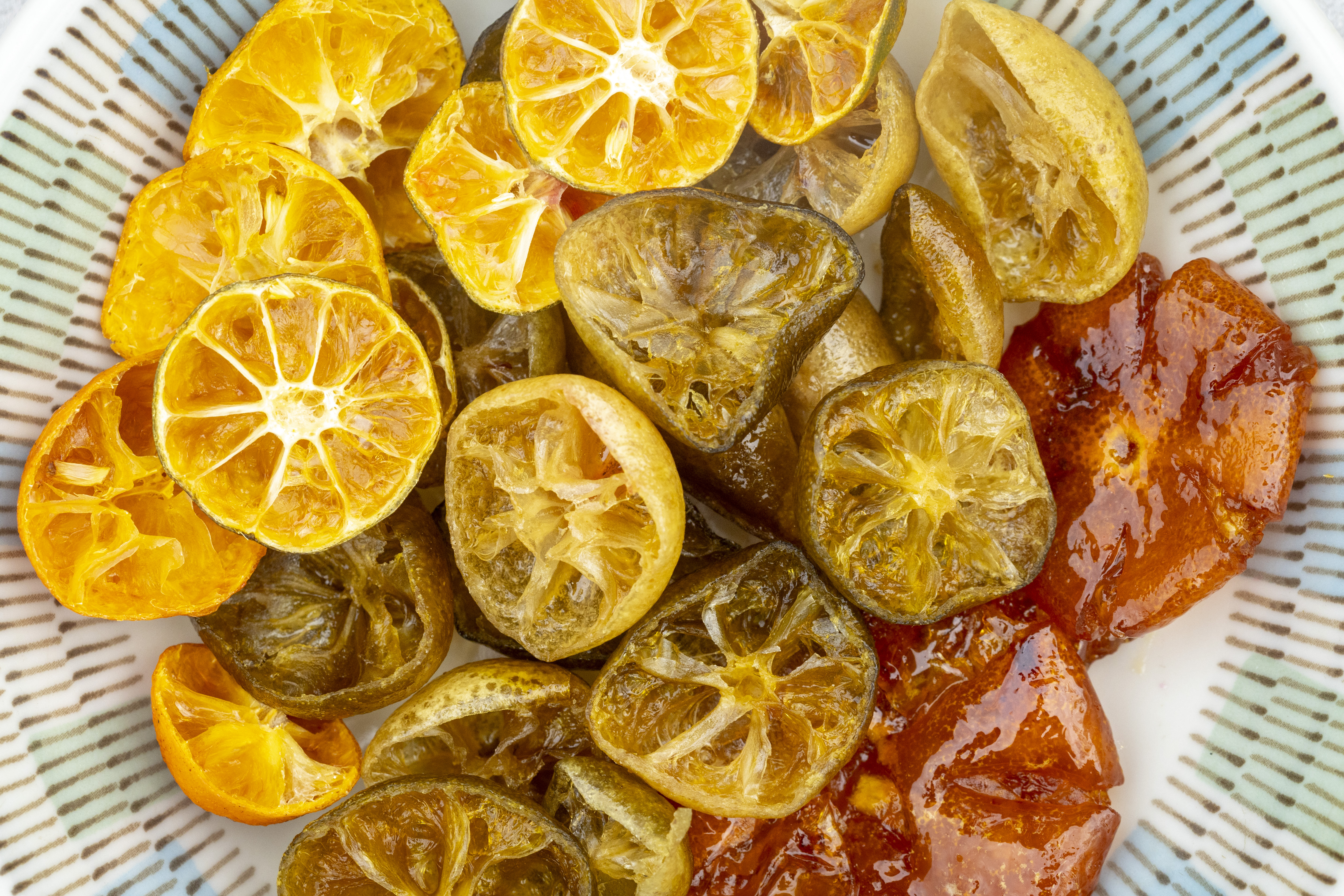
The trees produce fruit twice a year, once in August to September, and again around the Lunar New Year. The tangerines we harvest in summer are usually green calamansis, which have a more bitter skin than the golden calamansis during the winter. Their flesh tastes more sour as well. That explains why we rarely see anything made from green calamansis on the market. We didn’t want to waste them, though, so we ran an internal event called Green Calamansi Day last August and experimented with different things we could make. It turned out that sugar could balance the bitterness out. Candied calamansis and dried calamansis are really tasty!
Now, towards the end of December 2025, the second batch of crop is coming in, though most of it hasn’t turned orange. It should start ripening in January.
6. What has it been like to successfully grow tangerines yourself? How is it different from your planting experience in the past?
Full of surprises, I’d say. I never had high expectations when I planted. I only tried my best and watered my plants on time. As I went through the process of rescuing trees, getting them back into soil and pruning, I felt extra anxious when there was a typhoon or heavy rain. When it turned out that we managed to grow edible fruits, and that they were capable of becoming ingredients for delicious treats—loved and appreciated by others—I felt as if I’d become a producer of food too. There’s pleasure that comes with that new identity.
7. Apart from that, has the Oh My Guts project brought you other surprises?
Most of my team members are villagers or neighbours who live nearby, and the farm created a perfect opportunity for us to become friends. Without the farm, we’d probably still just be hi-bye strangers.
8. What is next on the horizon for your team?
We’ll keep developing new products. It takes constant experiments and consistent hands-on practice. Then we’ll also improve the way we market these goods. These dried green calamansis, for instance, are the candied ones we mentioned in the workshop. The dried candied calamansis are a more recent invention. We’re going to have to play around with different kinds of sugar and adjust the drying time to improve the taste.
Another thing on our mind is to promote our work through public events. For a lot of people, the thought of replanting New Year tangerine trees is simply unimaginable. I hope that more people understand that we aren’t as far away from nature as we’d imagine. Nature can be within our reach.
9. How would you describe the relationship between people and nature?
I have a background in biology, so I have basic knowledge about ecology already, but I wanted to go the extra mile to actually live in nature. Once I moved in, I was confronted with the contradictions inherent in nature. Taking weeds as an example, I had assumed quite simply that you should let them grow. But excessive weeds invite mosquitoes and snakes, and cutting them back at the right moment actually helps other living things thrive, making life more comfortable for human beings as well. Or take the example of small animals coming into the field and eating our crops. Of course I wouldn’t want to kill them. But what should I do? Faced with these moments of tension on the farm, I learn to accept the rules of nature and work around them while putting more thought into my actions.
Farming has also taught me that changes in nature are unpredictable. When the weather gets cold enough for frost, I cannot abandon my crop in the cold while I go out and hang out with my friends. Even if I get home late, I will have to water my plants before going to bed. Water from the well is normally warmer than the air, which helps to prevent frost from forming on leaves. These are some of the things I’ve learned from the rhythm of nature. I can now decide which matters require urgent attention.
Sometimes, I realise how nature is more resilient than I’d imagined. This year, humidity was low throughout autumn and winter. There was hardly any rain, but the well still hadn’t run dry. I think the hills behind the field must’ve been collecting raindrops while I wasn’t noticing, and reserving them for us when we most needed it.
10. How do you strike a balance between human intervention and respecting nature’s ecosystem?
Let me use weeding again as an example. While I don’t have an immaculate set of rules about it, I just do what’s needed in the best ways I can. In summer, there’s plenty of rain and weeds grow fast, but the strimmer cannot deal with wet grass, so you have to pick a sunny day to do the work. Our stamina has limits as well. When I feel tired, I take a break. It also depends on where the weeds are growing. If they appear on one of the ridges on the field, I let them be. The roots of weeds can hold soil together, acting as a natural defence against heavy rain.
Afterword
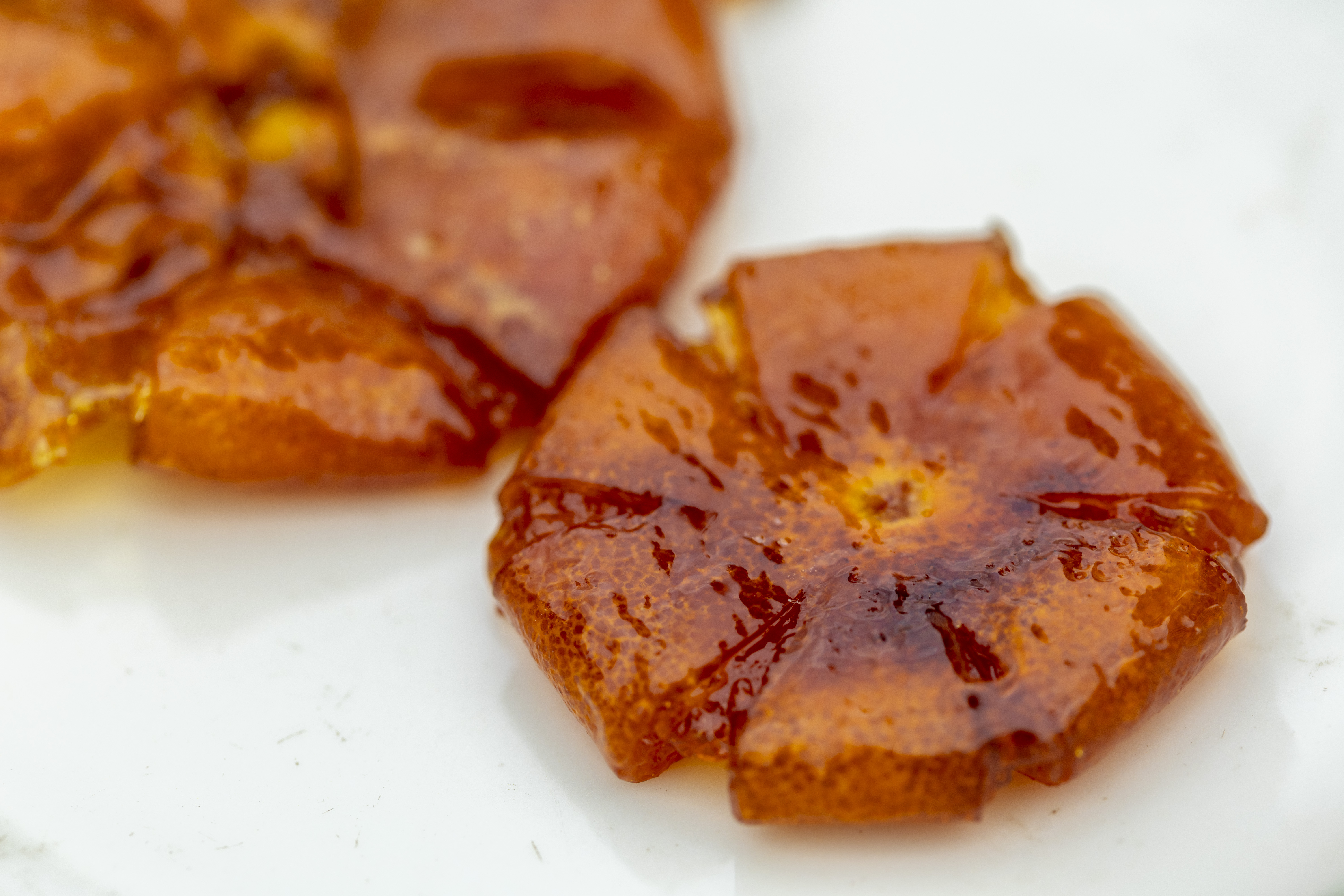
The first time I visited Oh My Guts’ farm was in October 2025, doing hands-on farm work with the Let Us Go! participants. I remember spreading chicken manure round the base of the trees with our bare hands. The smell stayed on my fingers for days. I still find this experience unforgettable. Coming back to Ping Kong Village two months later and seeing fruit on the trees, I was relieved that our effort hadn’t gone in vain. This time, Helen had new tangerine goods in store for me, including dried persimmon that resembled dried candied tangerine, and two different types of thin, dried tangerine slices, one candied and one plain. Helen was trying to infuse them in hot tea.
During the interview, I was able to taste a tea that carried a mild tangerine scent while Helen spoke about her project and what nature has taught her along the way. The keywords that I heard most from Helen were ‘trying,’ ‘playing,’ and ‘just do it!’ From the very beginning, the Oh My Guts project has been full of uncertainty, but it also renders any possibility possible, much like a young tangerine tree growing towards sunlight, ready to bear fruit one day.
Of everything I tasted that day, my favourite was the dried candied calamansi, which left a slightly bitter and sour flavour on the tip of my tongue, leaving my tastebuds tingling. When I told Helen how much I enjoyed the snack, she sounded surprised. ‘No way! You like the sour and bitter one?’ It only proves the point again. You only learn from trying.
Tips from Helen
How to Take the First Step
You don’t have to learn everything about a subject before you get to know it. Finding your way of seeing is more important. If you want to understand how farming works in Hong Kong, start with learning about crops and mindful eating. Buy vegetables at an organic farmers’ market or order your weekly vegetables from local farms. Then, when you eat them, put all five senses to use. Chew slowly, taste every flavour, and ask yourself: How is this different from the vegetables you usually eat? Are there varieties you’ve never seen before?
If it’s the natural world you’re curious about, go for a walk in a country park, or just a random garden near where you live. Pick a small space and spend a few minutes looking closely at your surroundings. You’ll be surprised to notice new and interesting things that you normally overlook.
Always start with everyday observation. Find something new and interesting, then go deeper.
Suggestions for Beginners
I wouldn’t call myself an experienced community organiser, but here are a few things I’ve learned along the way as a part of the Tai Ping Kai community in Sheung Shui.
Community work involves a lot of interpersonal relationships, including those with your working partners, external collaborators and members of the public who join your programmes. Good communication and a strong foundation of trust go a long way. Different people bring different perspectives, so it’s always a good idea to meet new friends, find out what other community organisers are doing and widen your perspectives. Someone might open a door for you somewhere and spark new ideas.
It’s also important to remember that community projects don’t always go your way. When you encounter these moments, or even doubt your ability at times, you have to find ways to lift yourself up again. Remember why you started, and think about all the unexpected harvests you gained along the way. Perhaps you managed to gather a group of like-minded friends. Perhaps you were able to arrive at a clearer picture of the kind of society you find ideal. These quiet yet charming moments will keep you going.
Glossary
| Chinese | English |
| 柑 | Mandarin |
| 桔 | Tangerine |
| 橙 | Orange |
| 柚 | Pomelo |
| 枸櫞、香水檸檬 | Citron |
| 金桔、金柑 | Calamansi / Golden Calamansi |
| 青桔 | Green Calamansi |
| 糖漬桔 | Candied Calamansi |
| 金桔餅 | Dried Candied Calamansi |
| 桔醬 | Calamansi Jam |
| 柿餅 | Dried Persimmon |